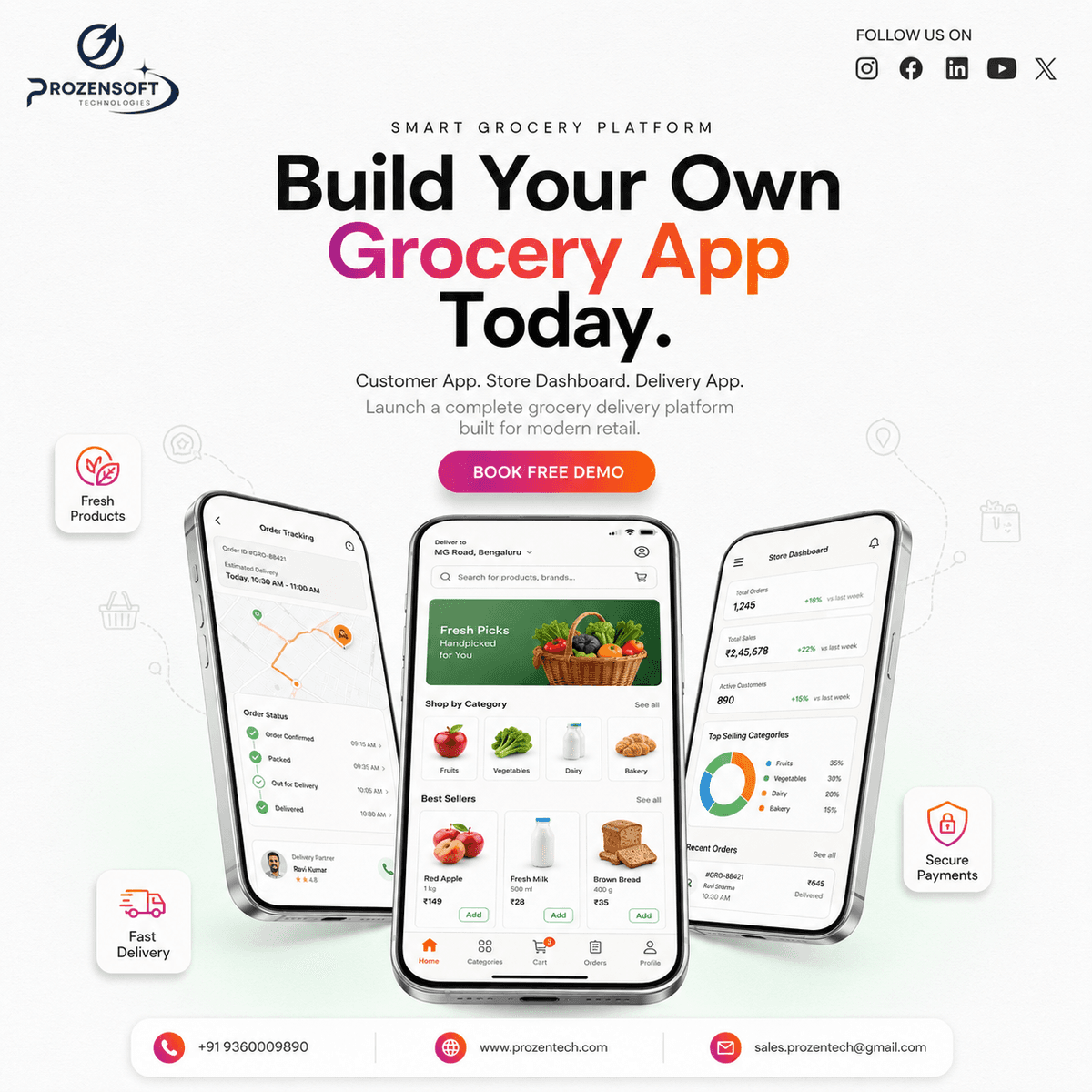
Essential Features of a Powerful Grocery App
The success of an online grocery platform depends heavily on how easy and convenient it is for customers to use.
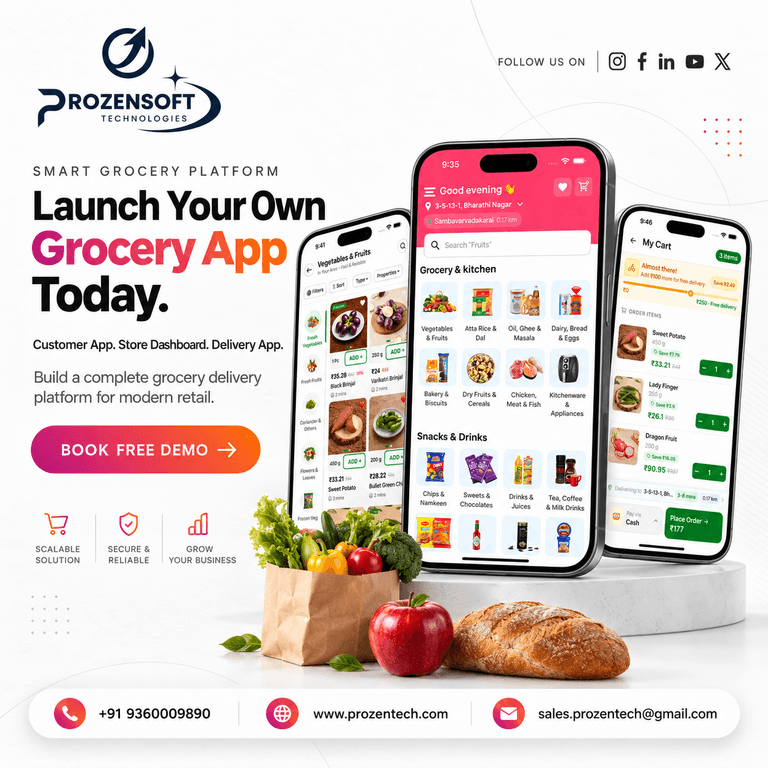
A modern grocery customer application can include:
- Easy registration and secure login
- Location-based store discovery
- Product categories and subcategories
- Smart product search and filters
- Product variants and attributes
- Shopping cart management
- Wishlist and favorite products
- Delivery address management
- Delivery slot selection
- Coupons and promotional offers
- Multiple payment methods
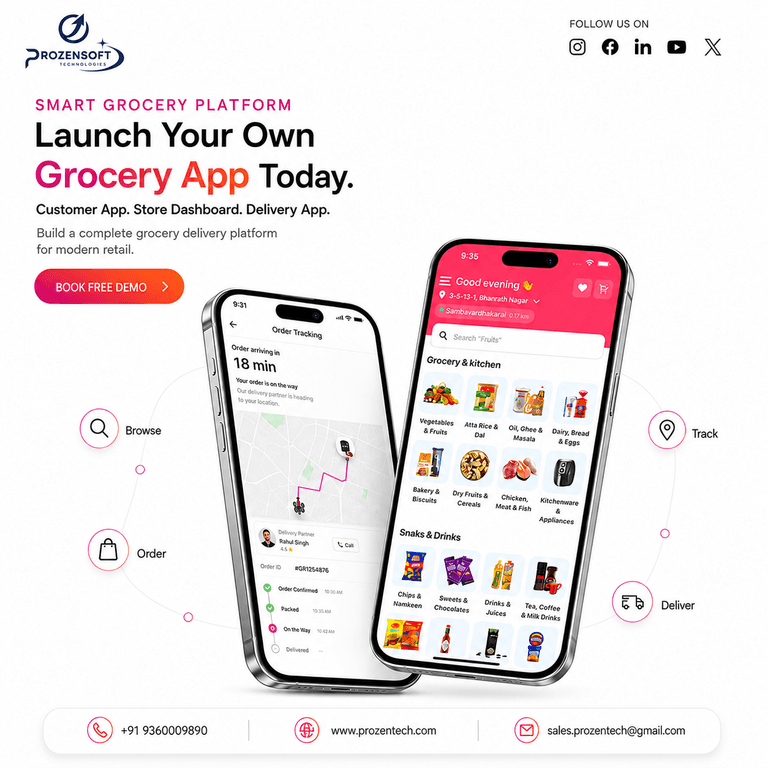
- Order tracking
- Push notifications
- Order history
- Ratings and reviews
Customers should be able to move smoothly from product discovery to checkout without unnecessary steps.
Personalized recommendations, frequently purchased products, repeat-order functionality, and relevant promotional offers can make the shopping experience even more convenient.
Professional Grocery App Development focuses on creating this seamless customer journey while ensuring that the platform remains scalable as products, stores, orders, and customers increase.
Grocery App Development for the Modern Retail Market
The way customers purchase groceries has changed significantly. Instead of visiting a physical store for every purchase, consumers increasingly expect the convenience of browsing products, placing orders, making payments, and receiving groceries at their doorstep.
For supermarkets, grocery chains, local stores, and entrepreneurs, Grocery App Development creates an opportunity to provide this convenient experience while building a stronger digital presence.
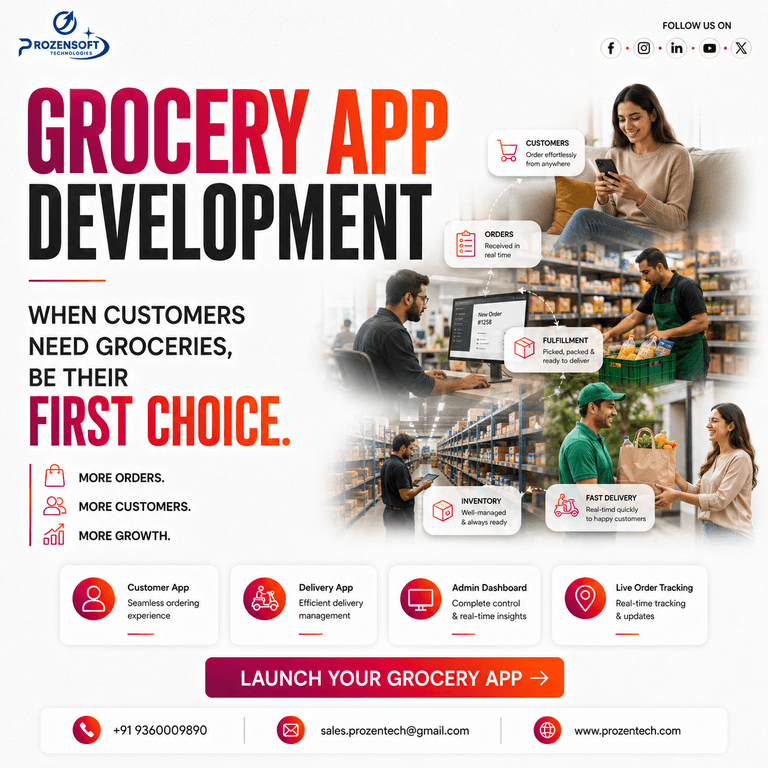
A grocery application connects customers, stores, delivery partners, and administrators through one centralized platform. Customers can explore products and place orders, while businesses can manage inventory, pricing, orders, promotions, and deliveries efficiently.
A well-developed grocery platform can support different business models, including single-store grocery businesses, multi-store marketplaces, supermarket chains, hyperlocal delivery platforms, and dedicated grocery delivery startups.
Rather than simply creating another shopping application, businesses can build a complete digital ecosystem designed around their operational requirements.
Store, Inventory and Order Management
Behind every smooth grocery delivery experience is a powerful management system.
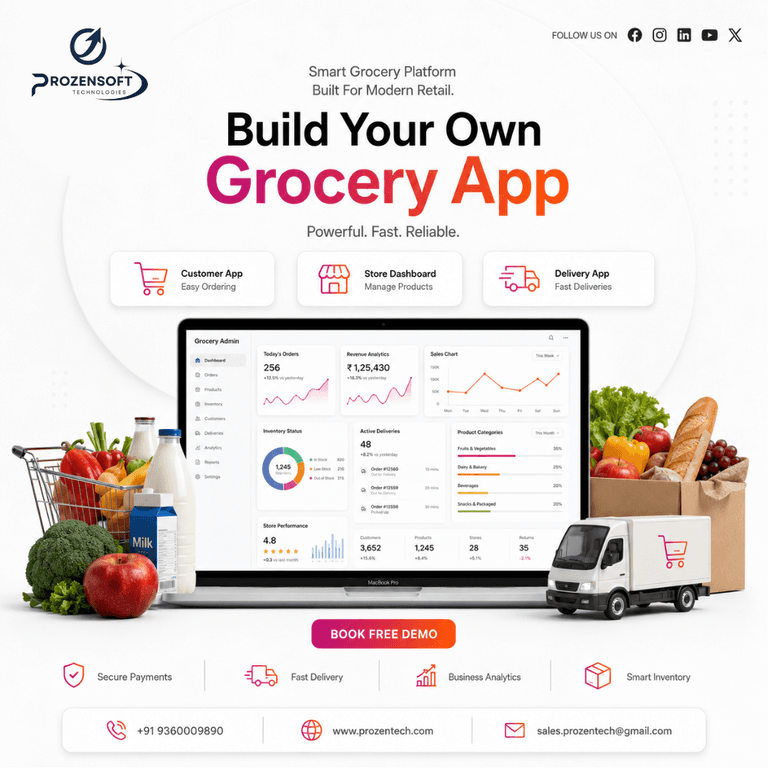
Grocery businesses need complete visibility over their products, inventory, pricing, orders, and store operations. A centralized admin dashboard can simplify these processes.
Administrators can manage:
- Grocery stores and branches
- Product categories
- Individual products
- Product images and descriptions
- Product variants
- Stock availability
- Pricing and discounts
- Minimum order values
- Delivery zones
- Customer accounts
- Incoming orders
- Cancellations and refunds
- Coupons and promotions
- Payment transactions
- Reports and analytics
Inventory management is especially important for grocery businesses because product availability can change frequently.
When stock information is updated accurately, customers are less likely to order unavailable products. This reduces cancellations, substitutions, and customer frustration.
For multi-store platforms, each store can also maintain its own inventory, pricing, operating hours, delivery radius, and order management workflow.
Smarter Grocery Delivery Management
Fast and reliable delivery is one of the most important parts of an online grocery business.
A dedicated delivery partner application can help businesses manage the last-mile delivery process more effectively.
Delivery partners can receive new delivery assignments, view pickup information, access customer delivery details, update order status, navigate to destinations, and track completed deliveries.
The overall workflow can be structured as:
Customer Places Order → Store Confirms Order → Products Are Prepared → Delivery Partner Assigned → Order Picked Up → Live Delivery Updates → Order Delivered
Customers can receive notifications as their order progresses through each stage.
Businesses can also configure delivery fees based on factors such as location, delivery distance, service zone, order amount, or business-specific pricing rules.
For hyperlocal grocery businesses, customers can be connected with nearby stores based on their delivery location. This can help shorten delivery distances and improve operational efficiency.
Flexible Payments, Offers and Revenue Models
Customers expect convenient and secure payment options when purchasing groceries online.
A grocery platform can support:
- Credit and debit cards
- Digital payment gateways
- Wallet payments
- Cash on delivery
- Promotional coupons
- Percentage discounts
- Fixed-value discounts
- Delivery fee offers
- Minimum purchase promotions
Businesses can configure their payment options according to their target market.
A multi-vendor grocery marketplace can also introduce additional revenue opportunities through commissions, delivery charges, promotional placements, vendor subscriptions, or service fees.
For example, marketplace administrators can charge grocery vendors a percentage commission for each completed order.
Having configurable pricing and revenue rules allows the platform to evolve as the business grows.
Why Invest in Custom Grocery App Development?
Every grocery business operates differently. A local grocery store may require a simple ordering and delivery system, while a growing marketplace may need multiple stores, delivery zones, vendor management, advanced inventory controls, and detailed reporting.
This is why custom Grocery App Development can provide greater flexibility than relying entirely on a generic ready-made platform.
A customized grocery solution can be designed around your:
- Business model
- Branding
- Target customers
- Product structure
- Store locations
- Delivery workflow
- Pricing strategy
- Payment requirements
- Promotional strategy
- Future expansion plans
At Prozensoft Technologies, we develop scalable grocery applications for startups, supermarkets, grocery retailers, and online delivery businesses.
A complete solution can include the Customer App, Delivery Partner App, Store Management System, Admin Dashboard, Payment Integration, Order Management, Inventory Management, and Analytics required to operate a modern grocery delivery platform.
Whether you are digitizing an existing supermarket or launching a new grocery delivery startup, the right technology can help automate operations, improve customer convenience, and create a platform ready for future growth.
Planning to build your own grocery delivery platform?
Connect with Prozensoft Technologies to discuss your Grocery App Development requirements and transform your business idea into a scalable digital solution.
FAQ
1. What is grocery app development?
Grocery app development is the process of building a digital platform that allows customers to browse grocery products, place orders, make payments, and receive deliveries while enabling businesses to manage products, inventory, orders, customers, and delivery operations.
2. What applications are required for a grocery delivery business?
Depending on the business model, a complete platform can include a customer app, delivery partner app, store or vendor panel, admin dashboard, and web-based grocery ordering platform.
3. Can a grocery app support multiple stores?
Yes. A multi-store grocery platform can allow several stores or vendors to manage their products, inventory, pricing, orders, delivery areas, and operating hours through dedicated dashboards.
4. Can customers order from the nearest grocery store?
Yes. Location-based functionality can identify supported stores near a customer's delivery location based on configured service areas and delivery radius.
5. Can inventory be managed through the admin dashboard?
Yes. Administrators or authorized store managers can manage products, stock quantities, variants, pricing, availability, and other inventory-related information from the management dashboard.
6. Can online payments be integrated into a grocery app?
Yes. Grocery platforms can integrate suitable payment gateways to support card payments, digital payment methods, refunds, and other transaction workflows depending on the target country.
7. Can the grocery platform be customized for my business?
Yes. Features, branding, pricing models, delivery workflows, payment methods, store structure, and administrative controls can be customized according to your business requirements.
8. Is grocery app development suitable for supermarkets and startups?
Yes. Grocery applications can be developed for local stores, supermarkets, supermarket chains, hyperlocal delivery startups, multi-vendor marketplaces, and other grocery retail models.