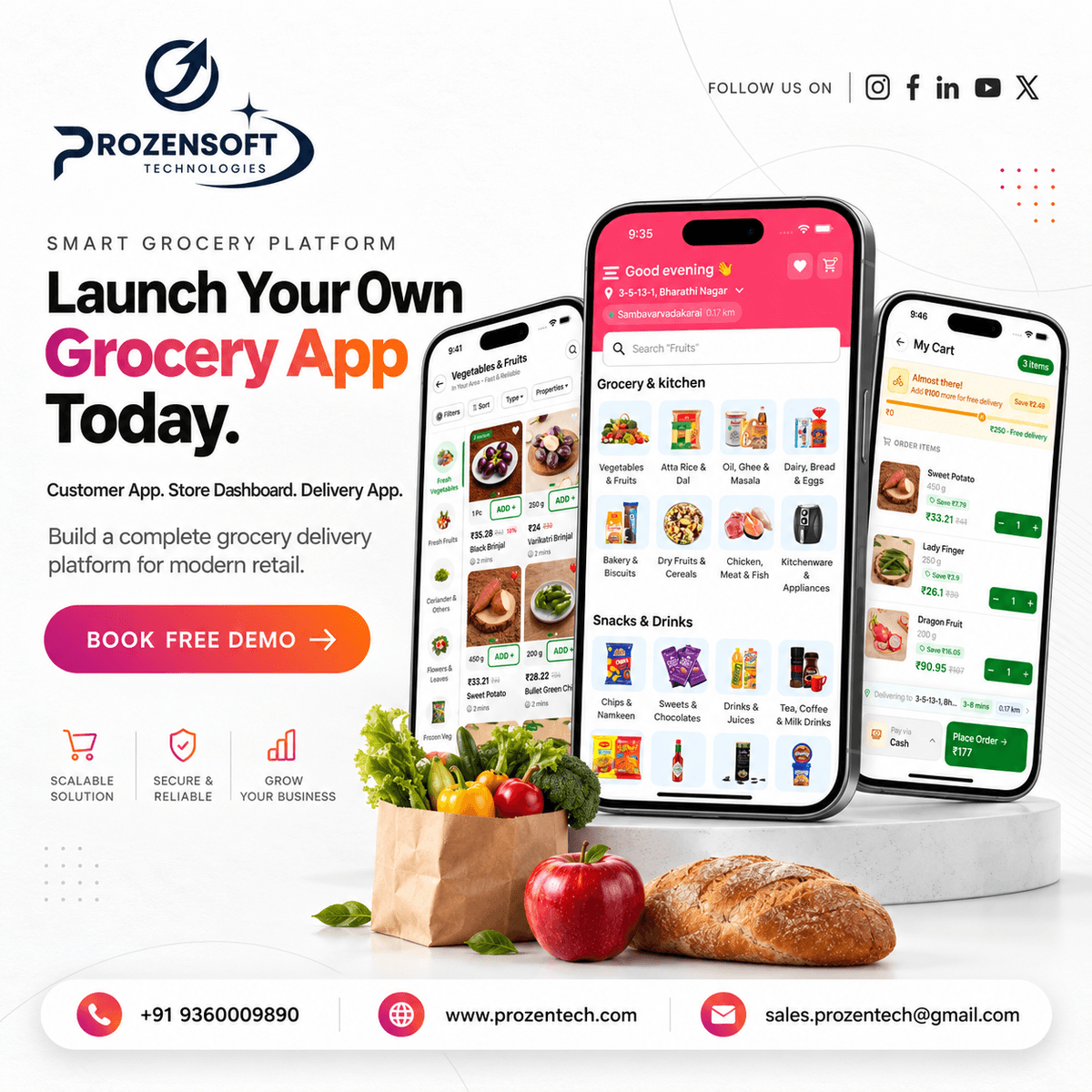
Grocery App Development Build a Smarter Online Grocery Delivery Platform
The grocery industry is rapidly moving toward digital-first shopping experiences. Customers today expect to browse products, compare prices, place orders, make secure payments, and receive groceries at their doorstep without visiting a physical store.
For supermarkets, grocery stores, retail chains, and startups, investing in Grocery App Development can create a powerful digital sales channel while making operations easier to manage.
A well-designed grocery delivery platform connects customers, stores, delivery partners, and administrators through one centralized ecosystem.
Why Grocery Businesses Need a Mobile App
Traditional grocery shopping continues to exist, but customer expectations have changed significantly.
People increasingly prefer convenience, faster delivery, multiple payment methods, product availability information, and personalized offers.
A grocery mobile app allows businesses to provide all these services through one platform.
Customers can:
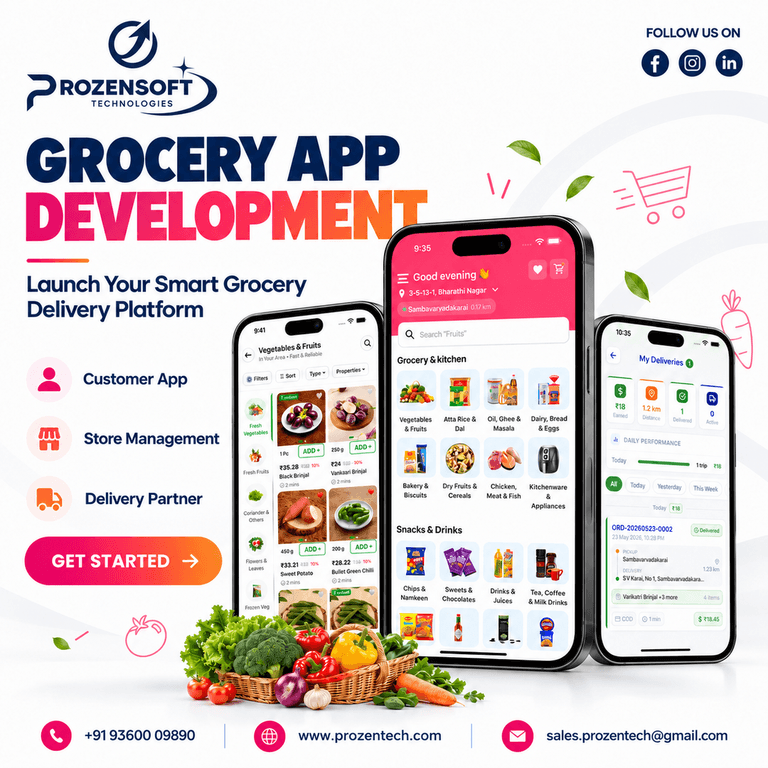
- Explore grocery categories
- Search for products instantly
- View prices and discounts
- Add products to their cart
- Select delivery addresses
- Choose payment options
- Track orders
- Reorder previous purchases
For businesses, a grocery app also provides better control over products, customers, orders, inventory, delivery operations, and promotions.
This makes Grocery App Development an important digital transformation strategy for grocery retailers that want to remain competitive.
Essential Features of a Grocery Customer App
The customer application is the most important touchpoint in an online grocery ecosystem.
It should provide a fast, simple, and intuitive shopping experience.
Some essential customer app features include:
User Registration & Login
Customers should be able to create accounts quickly using mobile numbers, email addresses, or supported authentication methods.
Product Categories
Products can be organized into categories such as:
- Fruits & Vegetables
- Dairy Products
- Beverages
- Snacks
- Household Essentials
- Personal Care
- Bakery
- Frozen Foods
Smart Search & Filters
Customers should be able to search products using names, brands, categories, prices, or other attributes.
Cart & Checkout
A smooth cart experience should allow users to adjust quantities, apply offers, add delivery instructions, and proceed to checkout without unnecessary steps.
Multiple Delivery Addresses
Customers can save home, office, and other delivery locations for faster ordering.
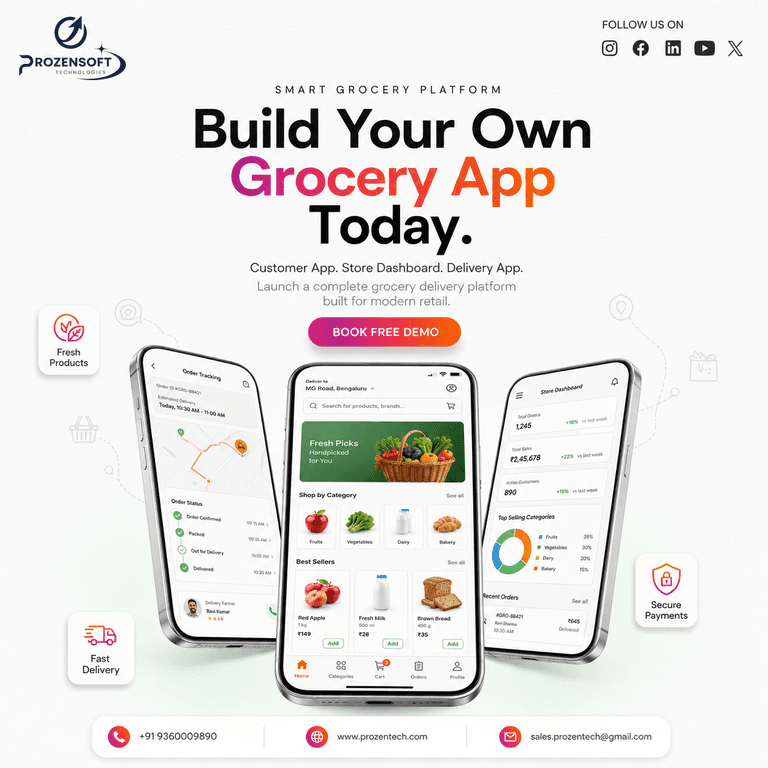
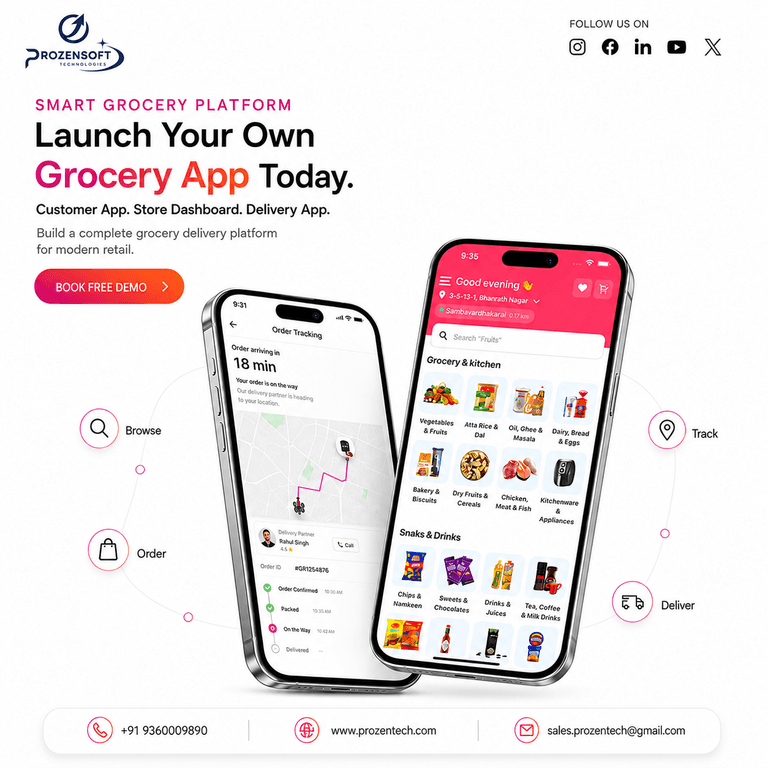
Order Tracking
Real-time order tracking improves transparency and keeps customers informed about order preparation and delivery progress.
Store, Product & Inventory Management
Efficient store management is essential for any successful grocery delivery platform.
The admin or store management system should provide complete control over products and inventory.
Businesses can manage:
- Product names
- Categories
- Subcategories
- Product images
- Prices
- Discounts
- Variants
- Units
- Stock availability
- Minimum order quantity
- Product status
For products with different quantities or packaging, the platform can support multiple variants.
For example:
Rice:
- 1 KG
- 5 KG
- 10 KG
Milk:
- 500 ML
- 1 Litre
The inventory system can automatically update stock whenever an order is confirmed.
Products that are unavailable can also be temporarily disabled to prevent customers from ordering out-of-stock items.
A reliable inventory workflow helps reduce cancellations and improves customer satisfaction.
Delivery Partner App & Real-Time Order Tracking
A grocery delivery platform requires strong delivery management to ensure orders reach customers on time.
A dedicated driver or delivery partner app can simplify the complete delivery process.
Important driver app features include:
- Driver login
- Online/offline status
- New delivery requests
- Pickup details
- Customer delivery address
- Route navigation
- Order status updates
- Delivery confirmation
- Earnings details
- Delivery history
Once a driver accepts an order, customers can receive real-time delivery updates.
Typical delivery statuses can include:
- Order Placed
- Order Confirmed
- Preparing Order
- Ready for Pickup
- Picked Up
- Out for Delivery
- Delivered
Real-time GPS tracking can further improve visibility for both customers and administrators.
Payments, Offers & Customer Engagement
Payment flexibility plays an important role in improving checkout conversions.
A modern grocery application can support:
- Credit cards
- Debit cards
- UPI
- Digital wallets
- Online payment gateways
- Cash on Delivery
Businesses can also run promotional campaigns through discount coupons and offers.
Examples include:
- First-order discounts
- Free delivery offers
- Percentage-based discounts
- Fixed-value coupons
- Festival promotions
- Minimum-order offers
Push notifications can also be used to inform customers about:
- New offers
- Order updates
- Delivery status
- Restocked products
- Seasonal promotions
Personalized communication can encourage customers to return and place more orders.
Loyalty points, referral rewards, and wallet systems can also be added depending on the business model.
Powerful Admin Panel for Complete Business Control
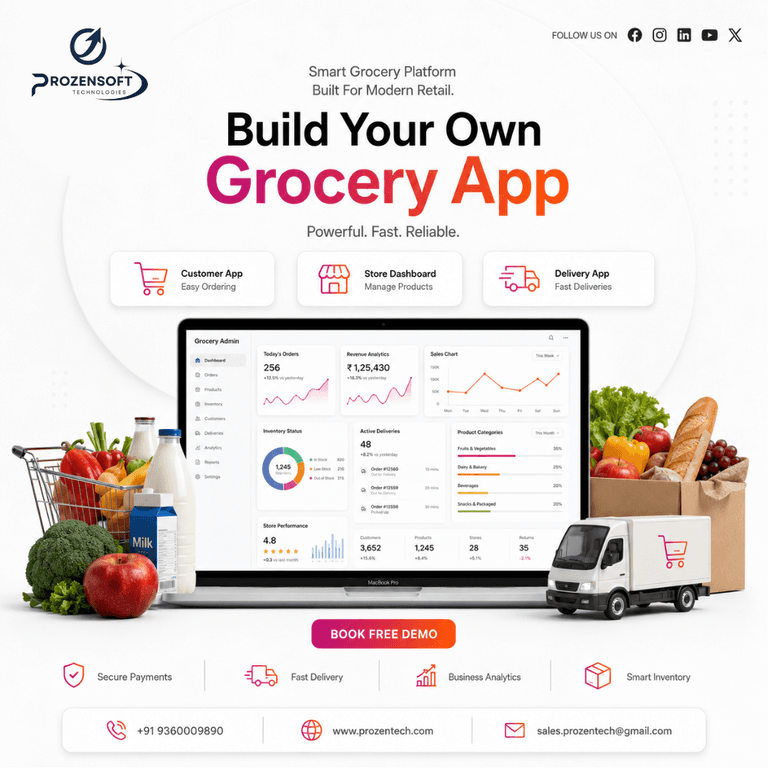
A grocery delivery platform becomes much easier to manage with a centralized admin dashboard.
The admin panel can provide control over the entire ecosystem.
Administrators can manage:
- Customers
- Stores
- Products
- Product categories
- Inventory
- Orders
- Delivery partners
- Payments
- Coupons
- Delivery charges
- Service areas
- Reports
- Notifications
The dashboard can also display important business metrics such as:
- Total orders
- Completed orders
- Cancelled orders
- Revenue
- Active customers
- Best-selling products
- Delivery performance
For businesses operating multiple stores, the platform can also support store-specific inventory, pricing, delivery radius, operating hours, and order management.
A scalable architecture allows the grocery business to expand into additional locations without rebuilding the entire application.
Why Choose Prozensoft Technologies for Grocery App Development?
At Prozensoft Technologies, we build scalable grocery delivery platforms designed around real-world business operations.
Our Grocery App Development solutions can include:
- Customer Mobile App
- Driver Mobile App
- Admin Web Panel
- Product & Category Management
- Inventory Management
- Cart & Checkout
- Online Payments
- Delivery Tracking
- Coupon Management
- Notifications
- Reports & Analytics
- Multi-Store Support
Whether you are launching a local grocery delivery startup, digitizing an existing supermarket, or building a large-scale grocery marketplace, we can develop a flexible solution designed around your business requirements.
Build a faster, smarter, and more convenient grocery shopping experience for your customers.
FAQ
1. What is Grocery App Development?
Grocery App Development is the process of creating mobile and web applications that allow customers to browse grocery products, place orders, make payments, and receive deliveries through a digital platform.
2. What applications are required for a grocery delivery business?
A complete grocery delivery solution usually includes a customer app, delivery partner app, and admin web panel. Store management functionality can also be added based on the business model.
3. Can inventory be managed through the grocery app?
Yes. Administrators can manage product availability, stock quantities, variants, pricing, and out-of-stock products through the admin panel.
4. Can the grocery platform support multiple stores?
Yes. A scalable grocery platform can support multiple stores, branches, service areas, pricing structures, and store-specific inventory.
5. Can customers track grocery deliveries in real time?
Yes. GPS integration can allow customers to track the delivery partner and receive live order status updates.
6. Can online payment gateways be integrated?
Yes. Grocery applications can integrate supported payment gateways for cards, UPI, wallets, and other online payment options.
7. Can offers and coupon codes be added?
Yes. The admin panel can support percentage discounts, fixed discounts, free delivery coupons, minimum-order promotions, and other promotional campaigns.
8. Is a grocery app suitable for a single supermarket?
Yes. Grocery delivery software can be developed for a single store and later expanded into a multi-store platform as the business grows.