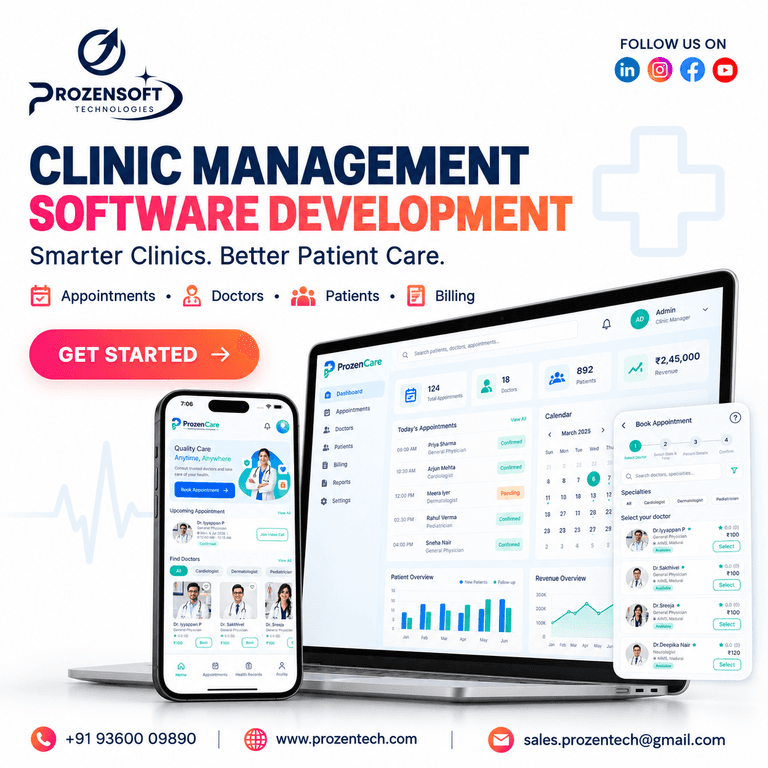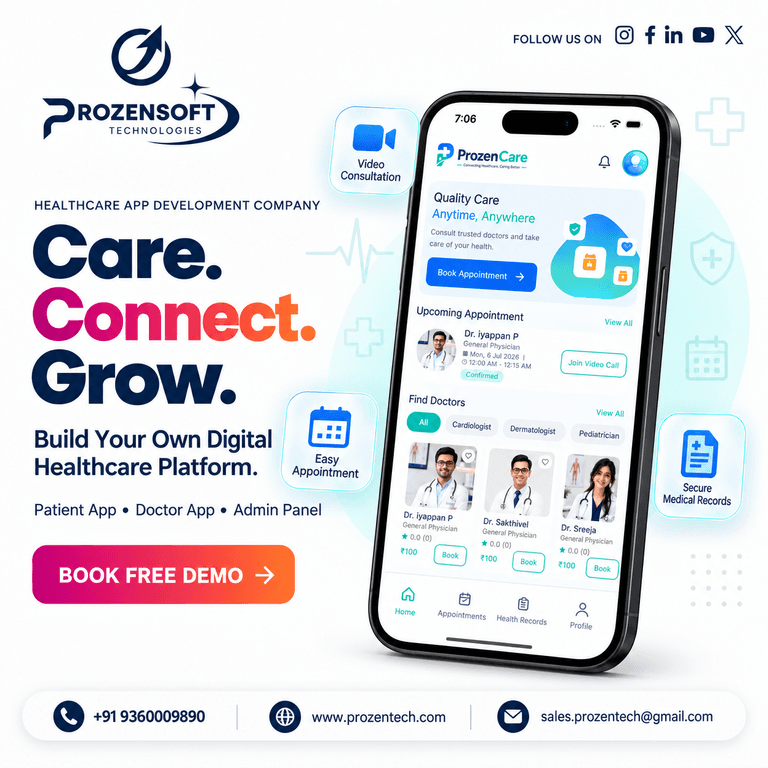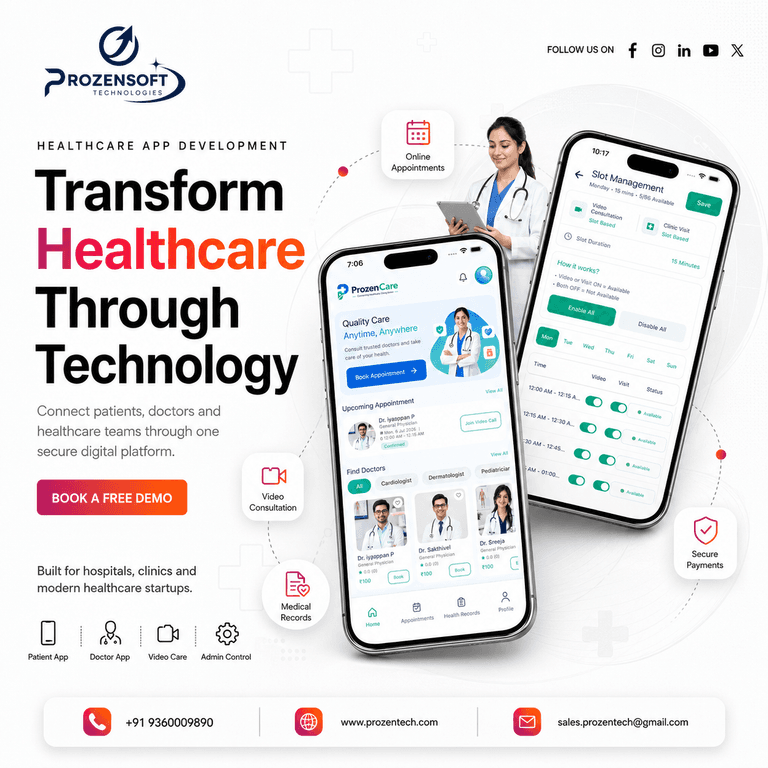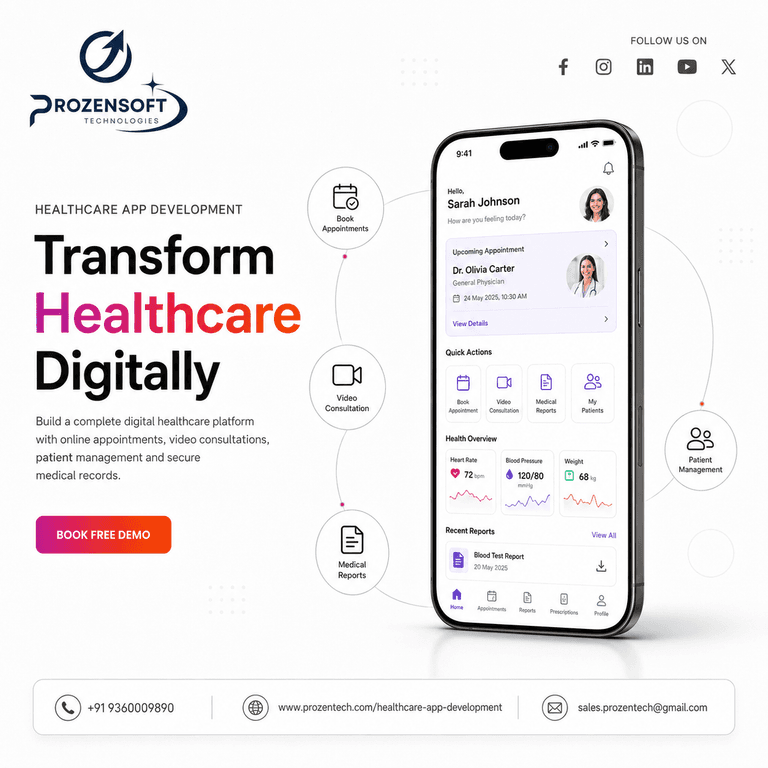
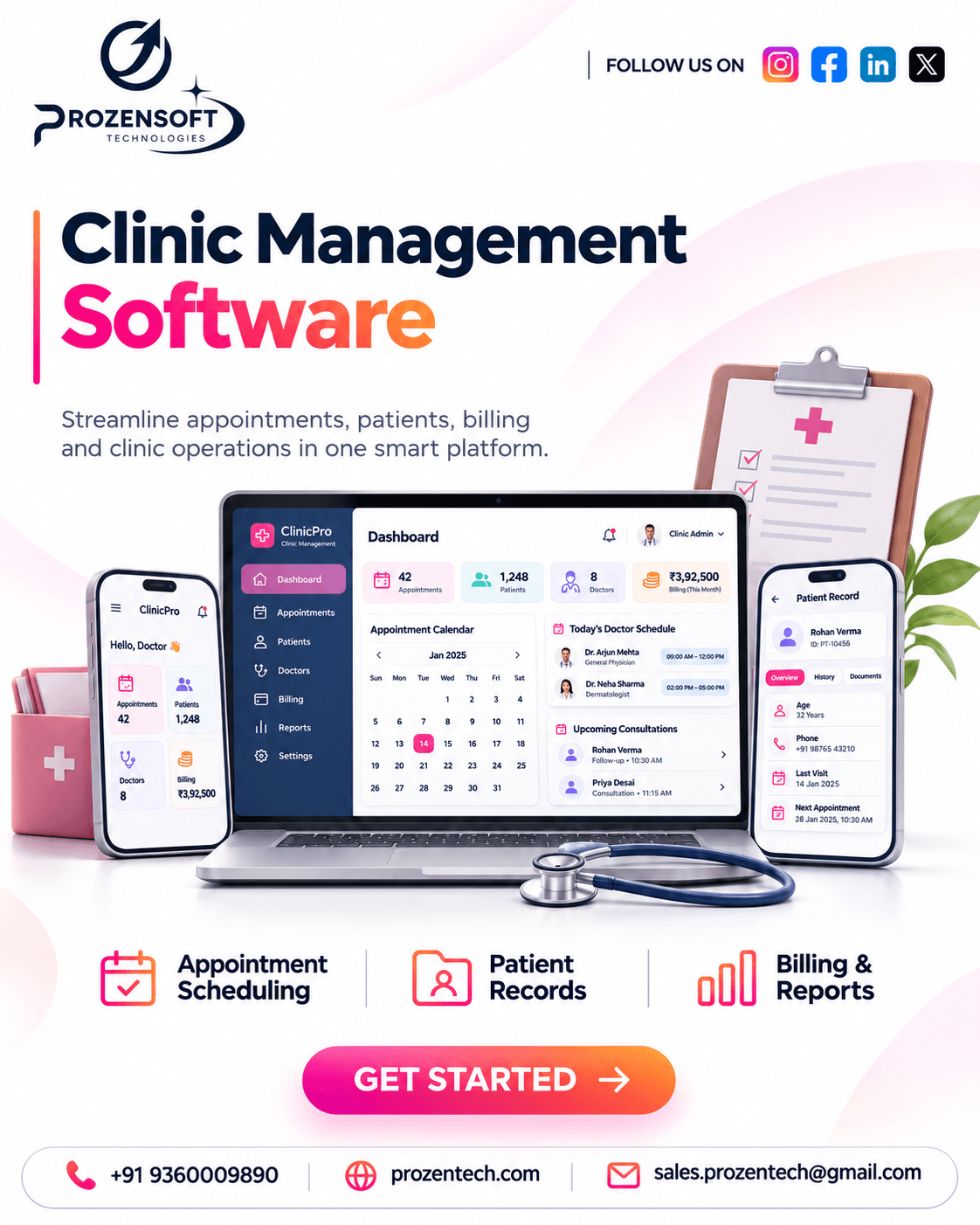
Clinic Management Software: Transforming Modern Healthcare Operations
Healthcare organizations are experiencing a fundamental shift in how they manage daily operations.
Patients expect convenient appointment booking, efficient consultations, accurate billing, and well-organized medical information. At the same time, clinic owners must manage staff schedules, patient communication, administrative workloads, and business performance.
Traditional manual processes often make these responsibilities more difficult.
Paper-based patient files can be time-consuming to retrieve, disconnected appointment systems can create scheduling conflicts, and manual billing may increase administrative errors.
Clinic management software offers a more organized approach.
It is a digital solution designed to help healthcare practices coordinate essential administrative and operational activities through a centralized platform.
Depending on its configuration, clinic management software can support:
-
Appointment scheduling and patient registration.
-
Patient profiles and consultation records.
-
Doctor availability and staff coordination.
-
Billing, invoicing, and payment tracking.
-
Operational reporting and administrative management.
Rather than relying on multiple disconnected tools, healthcare providers can manage important workflows through an integrated system.
For independent clinics, this can reduce repetitive administrative work. For multi-doctor practices, it can improve coordination between reception teams and healthcare professionals. For growing medical organizations, it can establish a stronger foundation for standardized processes and future expansion.
However, successful digital transformation is not simply about replacing paper with software.
It involves designing workflows that support healthcare professionals while improving the overall patient experience.
The most effective clinic management systems combine usability, reliability, security, and flexibility to meet the operational needs of the practice.
As healthcare services become increasingly digital, clinic management software is emerging as an important technology investment for organizations seeking greater operational efficiency and sustainable growth.
Essential Features Every Modern Clinic Management System Should Offer
A successful clinic management platform should simplify everyday activities without creating unnecessary complexity.
The right feature set depends on the size of the clinic, its medical specialties, operational workflows, and long-term business objectives.
Here are the essential capabilities healthcare organizations should consider.
1. Smart Appointment Scheduling
Appointment scheduling is one of the most important components of clinic operations.
A digital scheduling system can help reception teams organize bookings, manage available time slots, and coordinate doctor schedules.
Depending on the implementation, it may support online appointment requests, booking confirmations, rescheduling, cancellations, and automated reminders.
An organized scheduling process can reduce administrative workload and improve the overall booking experience.
2. Patient Registration and Profile Management
Patient information should be easy for authorized healthcare staff to access and update.
A centralized patient management system can organize demographic details, contact information, appointment histories, and other relevant administrative records.
Where clinical record functionality is included, additional safeguards and workflows are required for sensitive medical information.
3. Doctor and Staff Management
Clinics with multiple healthcare professionals need efficient scheduling and coordination.
Doctor management features can support consultation availability, working hours, leave schedules, and appointment allocation.
Role-based access can help ensure employees access only the information necessary for their responsibilities.
4. Billing and Payment Management
Manual billing can create unnecessary delays and reconciliation challenges.
A digital billing system can help clinics generate invoices, record payments, monitor outstanding balances, and organize financial transactions.
Depending on the practice, it may also require insurance-related workflows, tax configuration, or payment gateway integration.
5. Reports and Business Analytics
Clinic owners need visibility into operational performance.
Reporting tools may provide insights into appointment volumes, patient visits, billing activity, outstanding payments, and service utilization.
These insights can help managers identify workflow bottlenecks and make more informed operational decisions.
6. Centralized Administrative Dashboard
A centralized dashboard brings key operational information into a single interface.
Administrators can monitor schedules, staff activity, appointments, and business information without constantly switching between disconnected systems.
7. Notifications and Patient Communication
Automated communication can help clinics send appointment confirmations, reminders, and relevant service updates.
Communication preferences, consent requirements, and applicable privacy regulations should guide implementation.
8. Security and Access Control
Healthcare software must be designed with strong data protection practices.
Important considerations include secure authentication, access permissions, encryption, audit logging, backup policies, and appropriate data retention controls.
The goal is not to include every possible feature. It is to deliver the capabilities that make the clinic more efficient, organized, and dependable.
How Clinic Management Software Improves Efficiency and Patient Experience
Implementing clinic management software can create meaningful operational improvements when the technology is aligned with real healthcare workflows.
Its value extends beyond digitizing administrative records.
Reduced Administrative Workload
Reception teams frequently manage appointment requests, patient registrations, billing questions, and schedule changes.
A well-designed platform can simplify repetitive processes and reduce the need for duplicate data entry.
This allows administrative teams to devote more attention to patient-facing activities.
Better Appointment Organization
Scheduling conflicts and unclear doctor availability can create frustration for both patients and staff.
Digital appointment management helps clinics maintain more consistent schedules and communicate booking information more effectively.
Improved Patient Experience
Patients value convenience, clear communication, and efficient service.
Organized registration, scheduling, and billing processes can make clinic visits smoother.
Where supported, appointment reminders and digital communication can further improve the patient journey.
More Accurate Administrative Records
Maintaining information across disconnected spreadsheets and paper files can increase the risk of inconsistent records.
Centralized systems can improve information organization and reduce unnecessary duplication.
Appropriate validation, permissions, and data governance remain essential.
Greater Financial Visibility
Clinic managers need a clear understanding of revenue-related activities.
Digital billing and reporting can provide better visibility into invoices, collections, pending payments, and other financial information.
This can support improved financial administration and planning.
Stronger Coordination Between Teams
Doctors, receptionists, billing personnel, and administrators often depend on shared operational information.
A centralized platform can improve coordination while maintaining appropriate access restrictions.
Support for Business Growth
As a clinic expands, managing additional doctors, appointments, and administrative tasks becomes more challenging.
Configurable software can help standardize workflows and support increasing operational complexity.
Multi-location functionality may also be introduced when required by the business.
Improved Decision-Making
Operational reports can reveal patterns in appointment demand, service utilization, and administrative performance.
These insights help clinic owners evaluate business processes and identify areas for improvement.
However, technology alone does not guarantee better results.
Successful implementation requires staff training, accurate data, clear operating procedures, and ongoing system maintenance.
Clinic management software delivers the greatest value when it makes everyday healthcare operations simpler for both patients and professionals.
Choosing the Right Clinic Management Software for Your Practice
Selecting clinic management software is an important business decision.
A system that works well for a single-doctor clinic may not meet the requirements of a large, multi-specialty medical practice.
Healthcare organizations should evaluate software based on operational needs rather than feature count alone.
Understand Your Current Workflow
Before selecting a platform, identify the activities that create the most administrative difficulty.
Are appointment bookings difficult to manage?
Does the clinic rely on manual billing?
Are patient records distributed across multiple systems?
Do staff members repeatedly enter the same information?
Understanding these challenges helps define the software requirements.
Prioritize Ease of Use
Healthcare professionals need technology that supports their work rather than interrupts it.
An intuitive interface, clear navigation, and straightforward workflows can reduce training requirements and improve adoption.
Evaluate Customization Requirements
Different clinics have different processes.
A dental practice, diagnostic center, general clinic, and specialty healthcare facility may require different forms, schedules, and administrative workflows.
Customizable software can help accommodate these differences.
Review Security and Privacy Controls
Patient-related information may be subject to strict privacy and data protection obligations.
Healthcare organizations should evaluate authentication, authorization, encryption, audit trails, backups, and incident response procedures.
Applicable legal requirements depend on the countries and jurisdictions in which the clinic operates.
Consider Integration Capabilities
Some clinics require integration with laboratory systems, payment gateways, accounting platforms, communication services, or existing electronic health record systems.
Integration requirements should be assessed before development or implementation begins.
Assess Scalability
Software should support the clinic's expected growth.
Important considerations may include additional users, doctors, branches, service categories, and reporting requirements.
Understand Total Cost of Ownership
The initial development or subscription price is only one part of the investment.
Clinics should also consider hosting, maintenance, security updates, integrations, training, support, and future enhancements.
Evaluate the Development Partner
When choosing a custom software development company, review its technical capabilities, understanding of healthcare workflows, communication process, and approach to long-term maintenance.
A reliable development partner should help define clear requirements, implementation milestones, and responsibilities.
The best clinic management software is not necessarily the most complicated system. It is the one that fits the clinic's workflow, budget, and long-term objectives.
How Custom Clinic Management Software Is Developed
Building reliable clinic management software requires a structured development process.
The objective is to create a secure, maintainable system that supports real-world healthcare operations.
Step 1: Requirements Analysis
Development begins with understanding the clinic's business model, specialties, users, and operational processes.
Important requirements may include appointment scheduling, patient administration, billing, reporting, doctor management, and integration needs.
The team should also identify applicable privacy, security, and regulatory obligations.
Step 2: Workflow and UI/UX Design
The next stage involves designing user journeys and interface layouts.
A receptionist may need quick access to daily appointments.
A doctor may need a focused consultation interface.
An administrator may require financial summaries and operational reports.
Each user role should have an interface suited to its responsibilities.
Step 3: System Architecture
The technical architecture should support secure data access, reliable transactions, maintainability, and future expansion.
For many projects, a modern web application architecture can provide a flexible foundation.
Depending on requirements, technologies may include:
-
React.js or Next.js: For web applications and administrative interfaces.
-
Node.js and Express.js: For backend APIs and business logic.
-
MongoDB or PostgreSQL: For application data storage.
-
React Native: For optional Android and iOS applications.
-
Cloud Infrastructure: For deployment, monitoring, backups, and operational reliability.
Technology selection should reflect actual project requirements rather than follow a fixed template.
Step 4: Core Module Development
Development teams implement the approved modules and connect them through defined APIs and business workflows.
These may include patient registration, appointment management, billing, administrative reporting, and user access management.
Step 5: Security Implementation
Security should be considered throughout development.
Important practices include secure authentication, role-based permissions, encrypted communication, appropriate data protection, and auditability.
Healthcare-specific compliance requirements should be assessed and validated separately.
Step 6: Testing and Quality Assurance
Testing should cover functional workflows, permissions, data accuracy, billing calculations, performance, and security.
Realistic scenarios should be used to verify how the software performs during daily clinic operations.
Step 7: Deployment and Staff Training
After testing, the application can be deployed to an appropriate hosting environment.
Staff training, data migration planning, documentation, and operational procedures help support a smoother transition.
Step 8: Maintenance and Continuous Improvement
Software requires ongoing monitoring, updates, backups, and support.
As the clinic grows, new capabilities can be introduced based on operational requirements.
A successful healthcare software project combines thoughtful design, dependable engineering, strong security practices, and a clear understanding of clinical administration.
The Future of Clinic Management Software and How ProzenSoft Technologies Can Help
Healthcare technology continues to evolve as clinics seek more connected, convenient, and efficient ways to manage their operations.
The next generation of clinic management software is likely to focus on interoperability, automation, intelligent insights, and improved digital patient experiences.
Cloud-Based Clinic Management
Cloud-hosted systems can provide authorized users with access to clinic operations across supported devices and locations.
Cloud deployment also introduces responsibilities for security, availability, backups, and data governance.
Online Appointment Experiences
Digital appointment requests and booking interfaces can help patients interact with clinics more conveniently.
These experiences can be connected to administrative scheduling workflows where required.
Mobile-Enabled Healthcare Administration
Mobile applications may allow authorized staff to access selected operational features while enabling patients to manage appointments and receive relevant updates.
AI-Assisted Administrative Automation
Artificial intelligence may support tasks such as appointment demand forecasting, administrative document processing, and operational analysis.
Any AI functionality involving healthcare information requires appropriate validation, human oversight, privacy protections, and careful consideration of its intended use.
Connected Healthcare Systems
Interoperability is becoming increasingly important.
Depending on business needs, clinics may benefit from appropriate integrations with laboratory systems, electronic health records, payment providers, and communication platforms.
Data-Driven Operational Decisions
Advanced reporting can help healthcare organizations understand appointment trends, administrative workloads, and financial performance.
These insights may support more informed business planning.
Clinic Management Software Development by ProzenSoft Technologies
At ProzenSoft Technologies, we help businesses explore and develop digital solutions tailored to their operational requirements.
Our approach to clinic management software development focuses on practical workflows, user-friendly interfaces, scalable architecture, and business-specific customization.
Whether you're planning to modernize an independent clinic, develop a platform for a specialty healthcare practice, or build a more comprehensive clinic administration system, the development process should begin with a clear understanding of your needs.
Potential solution areas include:
-
Custom appointment scheduling systems.
-
Patient registration and administration.
-
Doctor and staff management.
-
Billing and payment workflows.
-
Administrative dashboards.
-
Reports and business analytics.
-
Role-based access and security features.
-
Third-party integrations.
-
Multi-branch functionality where required.
Final functionality, integrations, compliance obligations, and deployment arrangements should be defined through project requirements and technical assessment.
Build a Smarter Digital Future for Your Clinic
Healthcare professionals should be able to focus on delivering care without being overwhelmed by avoidable administrative complexity.
The right software can help create a more organized, efficient, and connected healthcare practice.
Smarter Clinic Operations. Better Patient Experiences. Technology Built Around Your Business.
Ready to explore a clinic management solution tailored to your healthcare organization?
Connect with ProzenSoft Technologies.
Frequently Asked Questions About Clinic Management Software
1. What is clinic management software?
Clinic management software is a digital solution designed to organize and simplify healthcare practice operations. Depending on its features, it can manage patient registration, appointment scheduling, doctor availability, billing, payment records, and administrative reporting through a centralized platform.
2. What are the main benefits of clinic management software?
The main benefits include reduced administrative workload, better appointment organization, more efficient billing, improved staff coordination, centralized information management, and greater visibility into clinic operations. Actual results depend on the software's capabilities and how effectively it is implemented.
3. Can clinic management software support multiple doctors and branches?
Yes. Clinic management software can be designed to support multiple doctors, departments, and locations. Multi-branch features may include location-specific schedules, staff permissions, administrative reporting, and centralized oversight. These capabilities should be included in the approved development scope.
4. How much does clinic management software development cost?
Development costs vary depending on the number of modules, customization requirements, user roles, integrations, security needs, mobile applications, and deployment infrastructure. A basic appointment and billing system generally requires less development effort than a comprehensive multi-location healthcare management platform. A detailed requirements assessment is necessary for an accurate quotation.
5. Is clinic management software secure for patient information?
Clinic management software can incorporate strong security controls, including encryption, secure authentication, role-based permissions, audit logs, and backup systems. However, security depends on proper implementation and ongoing maintenance. Healthcare organizations must also assess the privacy and regulatory requirements applicable to their operations.
6. Can clinic management software integrate with payment gateways and other healthcare systems?
Yes. Custom solutions can be designed to integrate with compatible payment gateways, communication services, laboratory systems, accounting tools, and electronic health record platforms. Integration feasibility depends on the availability of suitable APIs, technical compatibility, and relevant data protection requirements.
7. How long does it take to develop custom clinic management software?
Development timelines depend on project complexity, feature requirements, integrations, design approvals, testing, and deployment needs. A limited-scope system may require substantially less time than a comprehensive healthcare platform. The most reliable timeline is established after defining the project scope and implementation milestones.
8. Why choose ProzenSoft Technologies for clinic management software development?
ProzenSoft Technologies offers custom software development services focused on creating practical digital solutions for business requirements. Our development approach emphasizes clear project planning, user-friendly interfaces, maintainable architecture, and tailored functionality. Healthcare organizations can discuss their specific needs to determine an appropriate development scope and technology solution.