
Healthcare App Development Is Reshaping Modern Patient Care
Healthcare organizations are moving beyond traditional appointment systems and disconnected administrative tools. Healthcare App Development helps hospitals, clinics, doctors, healthcare startups, and medical service providers create connected digital platforms where patients can access services more conveniently and healthcare teams can manage operations more efficiently.
A modern healthcare application can bring appointment booking, doctor availability, telemedicine, prescriptions, medical records, payments, notifications, and administration into one coordinated ecosystem.
For patients, this means easier access to healthcare services. For healthcare providers, it creates better operational visibility and reduces repetitive manual processes.
Instead of treating a mobile application as an additional channel, healthcare businesses can build it as a central part of their digital care strategy.
Create a Better Digital Experience for Patients
Patient experience is one of the most important areas of any healthcare platform.
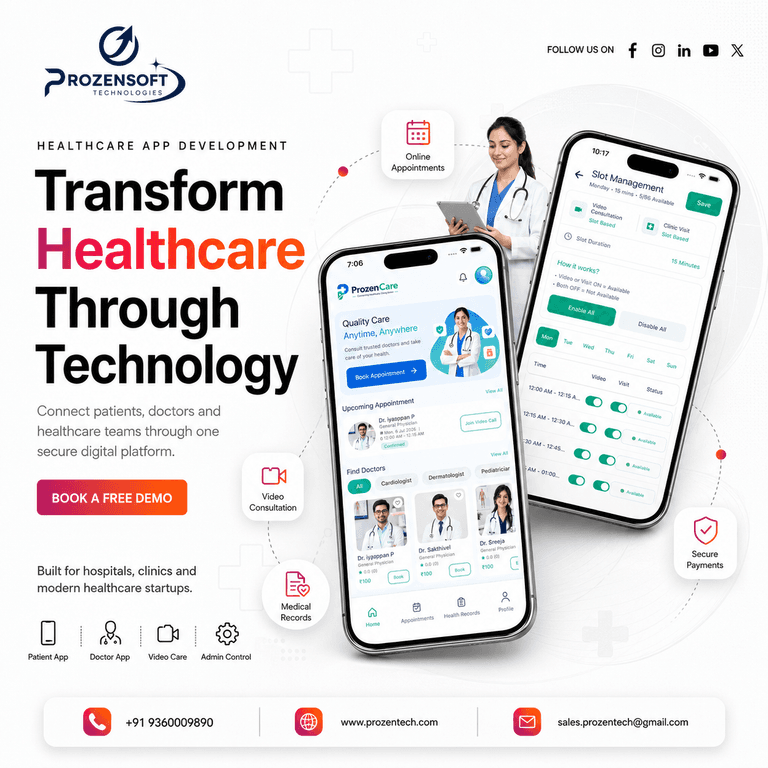
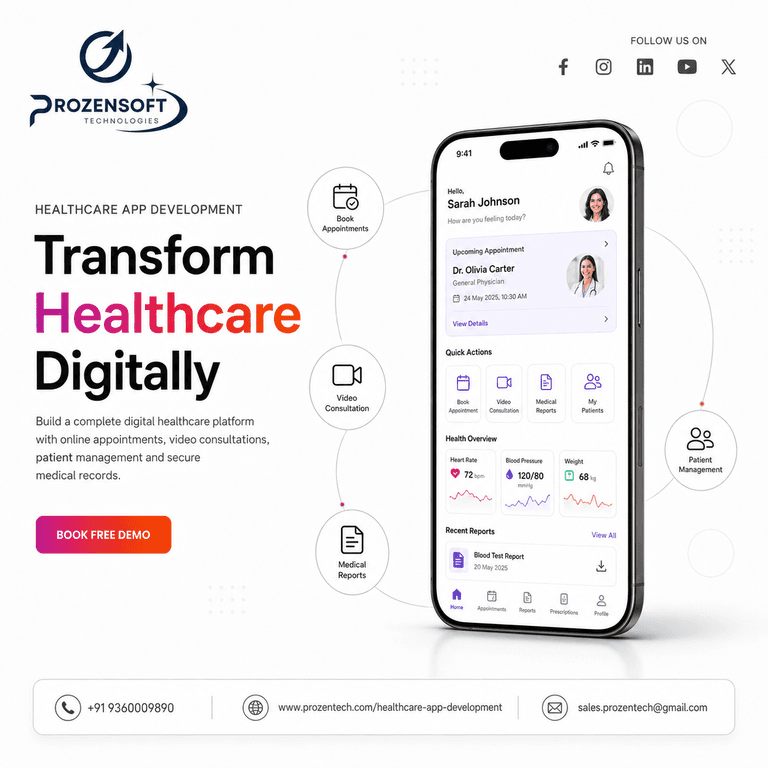
A well-designed patient application should make common healthcare activities simple and accessible without forcing users through complicated processes.
Patients can use the platform to:
- Create and manage their profile
- Search for doctors
- View specialties
- Check doctor availability
- Select hospitals or branches
- Book appointments
- Reschedule or cancel appointments
- Join video consultations
- Access prescriptions
- View consultation history
- Receive appointment reminders
- Make digital payments
Giving patients direct access to these services can reduce phone calls and administrative workload while improving convenience.
A simple user experience is especially important in healthcare because users may include people from different age groups and varying levels of technical familiarity.
The application should therefore focus on clarity, accessibility, and straightforward navigation.
Empower Doctors with Smarter Consultation Tools
Healthcare apps should also simplify the daily workflow of doctors.
A dedicated doctor application or portal can provide healthcare professionals with centralized access to appointments, patient details, consultation history, and schedules.
Doctors can manage:
- Daily appointments
- Consultation schedules
- Patient information
- Appointment requests
- Video consultations
- Digital prescriptions
- Consultation notes
- Availability
- Branch assignments
- Earnings and payment information
With structured digital workflows, doctors can spend less time coordinating administrative activities and more time focusing on patient care.
For healthcare organizations operating across multiple hospitals or clinics, doctors can also be assigned to specific branches with different consultation schedules and service fees where required.
This flexibility makes the platform suitable for both independent practices and larger healthcare networks.
Bring Telemedicine into the Healthcare Journey
Virtual consultations have become an important part of digital healthcare.
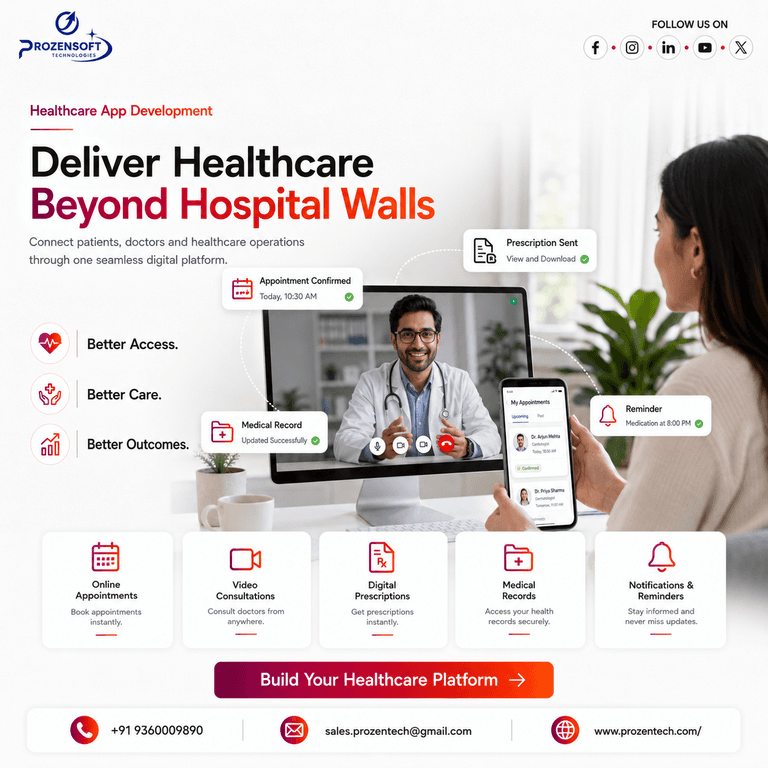
Instead of requiring patients to travel for every consultation, healthcare platforms can support secure video consultations between doctors and patients.
Telemedicine can be particularly useful for:
- Follow-up consultations
- Initial assessments
- Chronic care management
- Prescription reviews
- Remote patients
- Specialist consultations
- Non-emergency medical discussions
The patient can book an appointment through the application and join the consultation at the scheduled time.
Healthcare providers can combine telemedicine with appointment management, notifications, payments, and medical information to create a more connected experience.
Rather than operating video consultation as a separate service, integrating it directly into the healthcare platform creates a smoother journey for both doctors and patients.
Centralize Healthcare Operations with an Admin Panel
Behind every successful healthcare application is a strong administrative system.
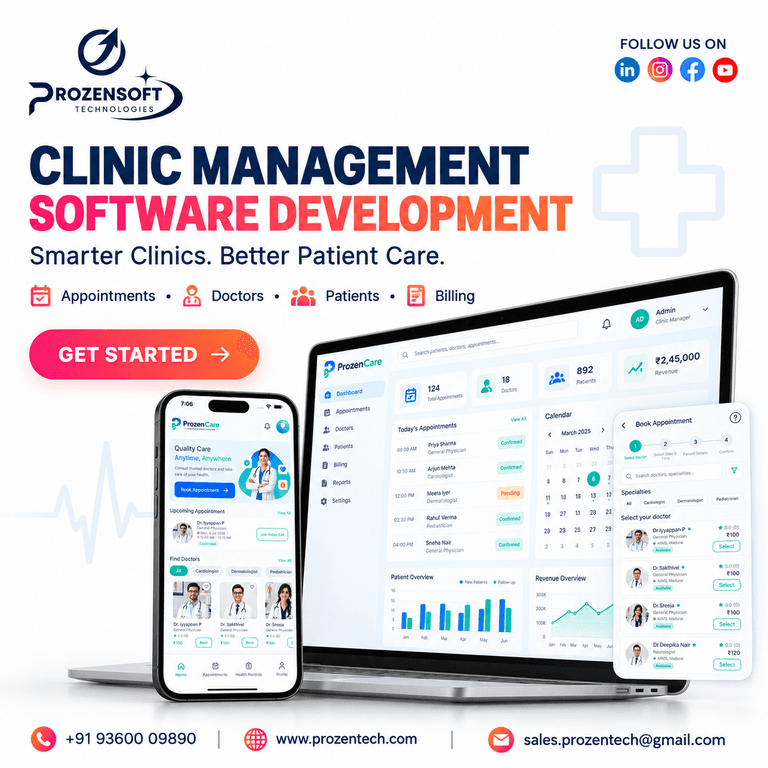
The admin dashboard allows hospitals, clinics, and platform operators to manage the complete ecosystem from one place.
Administrators can control:
✅ Patients
✅ Doctors
✅ Hospitals and branches
✅ Doctor verification
✅ Appointments
✅ Consultation fees
✅ Specialties
✅ Payments
✅ Refunds
✅ Notifications
✅ Reports
✅ User roles and permissions
The admin panel can also provide information about appointment volume, doctor activity, revenue, cancellations, patient registrations, and branch performance.
For multi-location healthcare organizations, centralized management becomes particularly valuable.
Instead of maintaining separate systems for every branch, management teams can monitor operations through one connected platform while maintaining branch-level control where needed.
This creates better visibility and supports faster business decisions.
Build a Secure and Scalable Healthcare Platform
Security, reliability, and scalability should be considered from the beginning of any Healthcare App Development project.
Healthcare platforms may handle sensitive patient information, appointment history, medical records, prescriptions, and payment data.
Therefore, businesses should consider features such as secure authentication, role-based access, protected APIs, encrypted communication, controlled data access, backups, and appropriate privacy practices.
The architecture should also support future growth.
A healthcare startup may initially launch with a limited number of doctors and patients but later expand into:
- Multiple hospitals
- Multiple clinics
- New cities
- More medical specialties
- Additional consultation services
- Subscription plans
- Insurance integrations
- Pharmacy integrations
- Laboratory integrations
- Advanced reporting
Building a scalable foundation reduces the need to rebuild the entire platform when the business expands.
At Prozensoft Technologies, we develop customized healthcare platforms designed around real operational workflows.
Whether you are planning a hospital application, doctor consultation platform, clinic management solution, telemedicine app, or multi-provider healthcare marketplace, the platform can be customized according to your business model.
A successful healthcare application should do more than digitize appointments. It should connect patients, doctors, administrators, and healthcare operations through one seamless experience.
Frequently Asked Questions About Healthcare App Development
1. What is Healthcare App Development?
Healthcare App Development is the process of creating digital applications for healthcare services such as doctor appointments, patient management, telemedicine, medical records, prescriptions, payments, and healthcare administration.
2. What applications can be included in a healthcare platform?
A healthcare platform can include a Patient App, Doctor App, Admin Panel, hospital or clinic portal, and additional modules depending on the business requirements.
3. Can patients book online doctor appointments?
Yes. Patients can search for doctors, view available appointment slots, choose a preferred schedule, and confirm appointments directly through the application.
4. Can video consultation be integrated?
Yes. Video consultation can be integrated into the platform so patients and doctors can conduct remote appointments directly through the application.
5. Can one healthcare platform manage multiple hospitals or clinics?
Yes. Multi-hospital and multi-branch functionality can be developed with separate doctors, schedules, consultation fees, and operational controls for each location.
6. Can healthcare applications accept online payments?
Yes. Payment gateways can be integrated for consultation fees, appointments, and other healthcare services based on the country and business requirements.
7. Can the healthcare app be customized?
Yes. Features, branding, workflows, integrations, roles, payment methods, consultation models, and administrative controls can all be customized.
8. Who can use healthcare app development services?
Healthcare apps can be developed for hospitals, clinics, independent doctors, diagnostic centers, healthcare startups, telemedicine companies, medical service providers, and healthcare networks.