Healthcare App Development Is Changing Modern Care
Healthcare app development has become an important part of digital transformation in the medical industry. Patients today expect easier appointment booking, faster communication with doctors, secure access to medical information, and convenient digital healthcare services.
A well-designed healthcare application can connect patients, doctors, clinics, hospitals, and administrators through one centralized platform. Instead of relying on multiple manual systems, healthcare organizations can manage important activities digitally and improve the overall patient experience.
For healthcare startups, mobile applications also create opportunities to introduce innovative services such as telemedicine, remote consultations, online appointment management, digital health records, and personalized healthcare experiences.
The objective is not simply to create another mobile application. A successful healthcare platform should make healthcare services more accessible while helping medical teams manage their daily operations efficiently.
Why Healthcare Businesses Are Investing in Mobile Applications
The healthcare industry is becoming increasingly digital. Patients now prefer platforms that allow them to access healthcare services without unnecessary waiting or complicated processes.
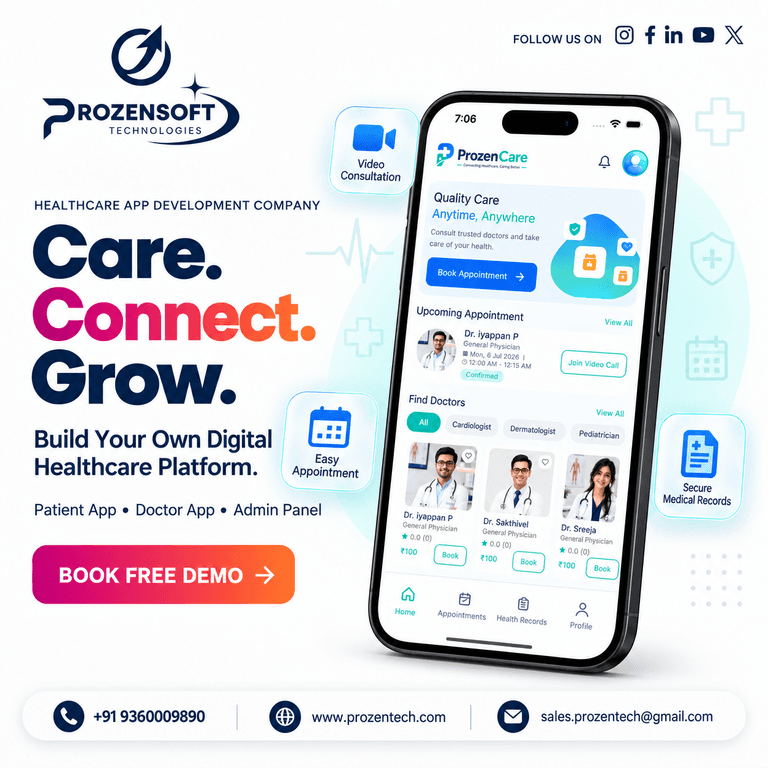
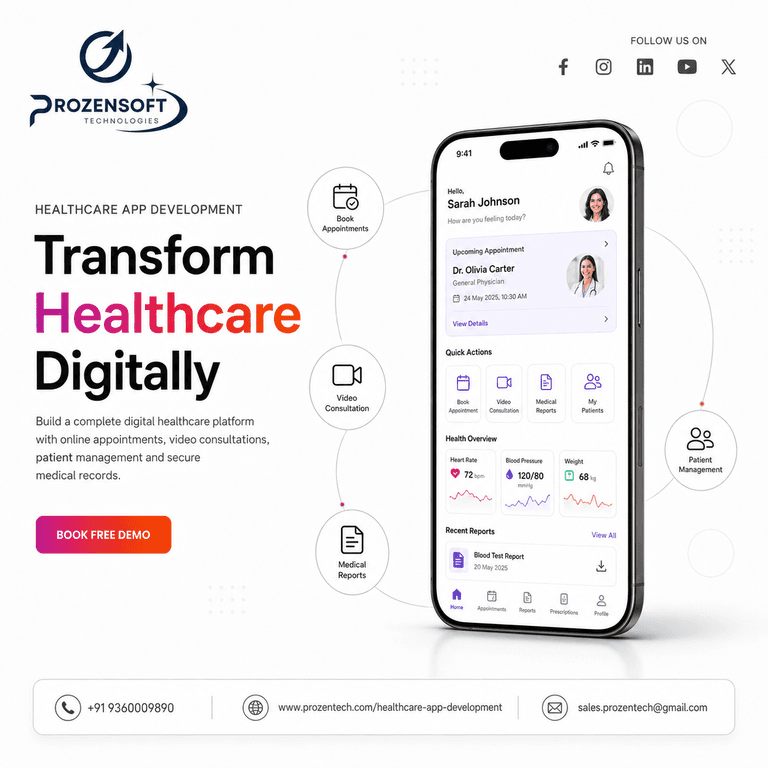
With a healthcare application, users can search for doctors, check availability, book appointments, receive reminders, attend video consultations, and access important health information directly from their smartphones.
For clinics and hospitals, this can reduce administrative workload and improve appointment organization. Doctors can manage schedules and patient consultations more efficiently, while administrators can monitor activities from a centralized dashboard.
Healthcare app development can also help organizations expand their services beyond physical locations. A clinic operating in one city can provide online consultations to patients in different regions, depending on applicable healthcare regulations and service availability.
This flexibility makes digital healthcare solutions valuable for both established healthcare organizations and emerging health-tech businesses.
Essential Features of a Healthcare Application
A strong healthcare application should provide useful features for every user involved in the platform.
The patient application can include doctor search, specialty filters, appointment booking, payment options, video consultations, appointment history, notifications, and access to medical documents.
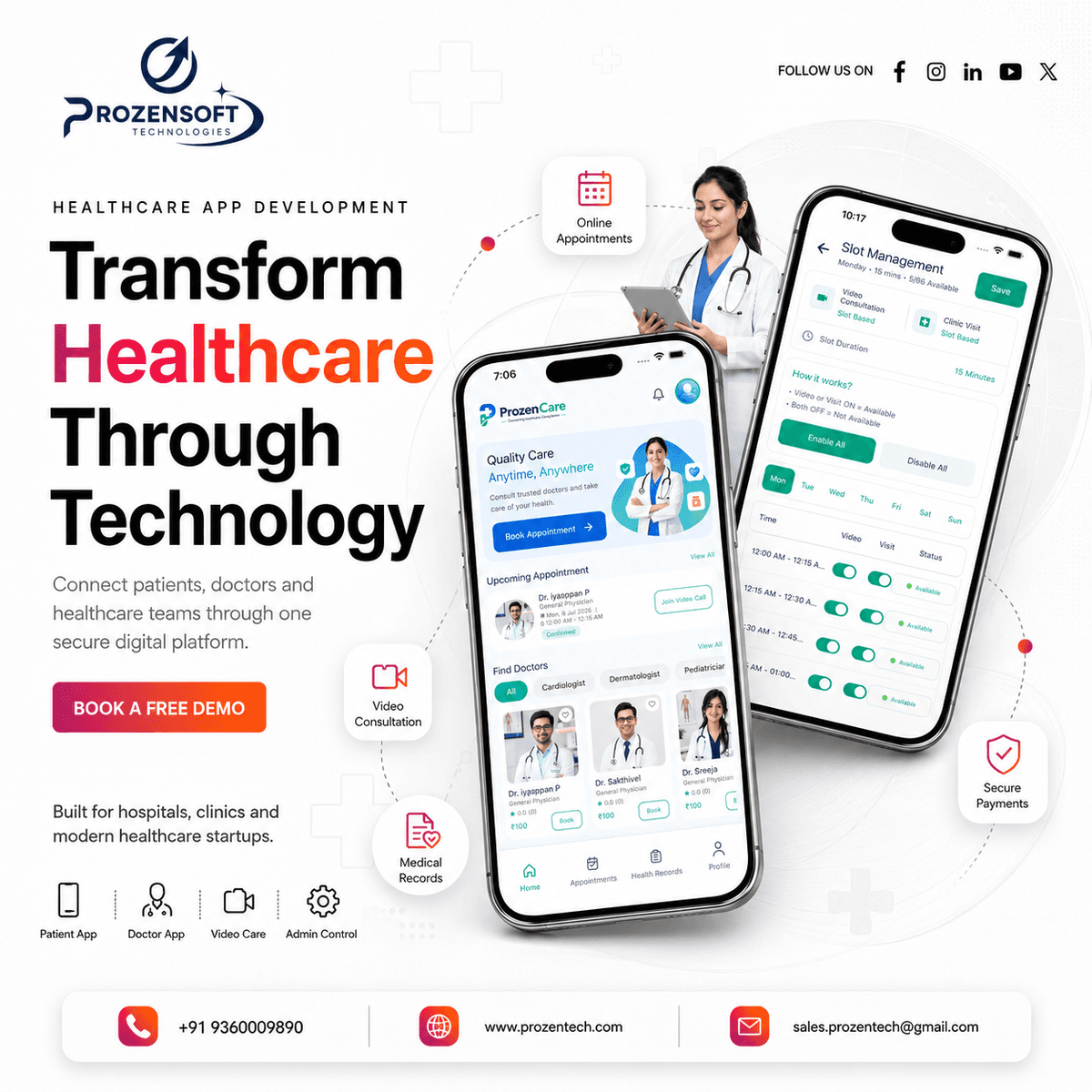
The doctor application can provide appointment management, availability settings, patient information, consultation schedules, video calling, and leave management.
Healthcare organizations may also require a powerful admin dashboard. Administrators can manage doctors, patients, branches, appointments, payments, categories, reports, and platform settings from one place.
Additional features can include:
- Online appointment scheduling
- Doctor availability and slot management
- Video consultation
- Digital prescriptions
- Medical record management
- Push notifications
- Secure payment integration
- Multi-clinic or multi-hospital management
- Patient and doctor profiles
- Reports and analytics
The final feature set should always be selected based on the healthcare business model and target audience.
Building a Secure and Scalable Healthcare Platform
Security is one of the most important considerations in healthcare app development because healthcare applications may process sensitive personal and medical information.
A reliable platform should use secure authentication, encrypted communication, controlled user permissions, secure APIs, and appropriate data protection practices.
Role-based access can help ensure that patients, doctors, receptionists, managers, and administrators only access the information relevant to their responsibilities.
Scalability is equally important. A healthcare startup may initially operate with a limited number of doctors and patients, but the platform should be capable of supporting additional users, clinics, locations, services, and appointments as the business grows.
Choosing a scalable architecture from the beginning can reduce the need for major rebuilding later and make future expansion easier.
How Healthcare Apps Improve the Patient Experience
Patient experience plays a major role in the success of a healthcare application.
Users should be able to complete common actions without confusion. Searching for a doctor, selecting a time slot, making a payment, joining a consultation, and checking appointment details should require only a few simple steps.
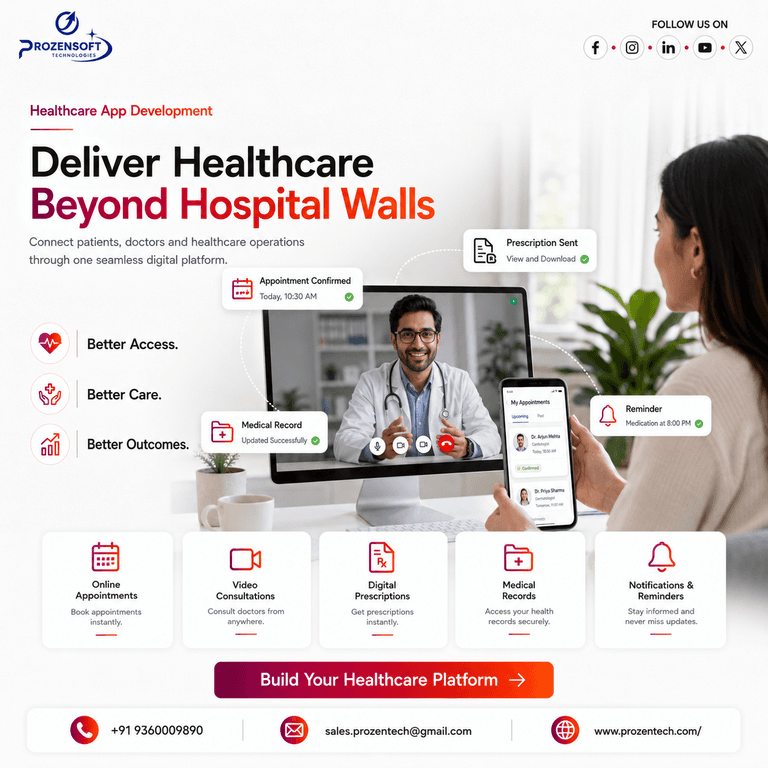
Healthcare apps can also improve communication by sending appointment confirmations, reminders, consultation updates, and other important notifications.
Video consultation features provide additional convenience for patients who may not need to visit a clinic physically for every appointment. This can be particularly useful for follow-up consultations, general medical discussions, and remote healthcare services.
By combining accessibility, convenience, and clear communication, healthcare applications can create a better digital relationship between patients and healthcare providers.
Launching a Healthcare App for Your Business
Developing a successful healthcare application begins with understanding the business model.
Before development starts, businesses should define their target users, healthcare services, appointment process, payment structure, doctor management requirements, and administrative workflow.
A healthcare application can be developed for different business models, including hospitals, individual clinics, multi-branch healthcare networks, doctor consultation platforms, telemedicine startups, diagnostic businesses, and other digital healthcare services.
The development process usually includes requirement analysis, UI/UX planning, application development, backend development, API integration, testing, deployment, and ongoing maintenance.
Working with an experienced healthcare app development team can help businesses create a solution that is user-friendly, scalable, secure, and aligned with long-term business goals.
At Prozensoft Technologies, we build healthcare applications designed for hospitals, clinics, doctors, healthcare startups, and entrepreneurs looking to launch modern digital healthcare platforms.
From patient and doctor applications to video consultations, medical records, payments, scheduling, and administrative management, we can develop a complete solution based on your business requirements.
Frequently Asked Questions
What is healthcare app development?
Healthcare app development is the process of creating mobile or web-based applications that allow patients, doctors, hospitals, clinics, and healthcare businesses to manage healthcare services digitally.
What features can be included in a healthcare app?
Common features include doctor search, appointment booking, video consultation, patient profiles, doctor schedules, medical records, notifications, secure payments, prescriptions, and admin management.
Can a healthcare app support multiple hospitals or clinics?
Yes. A healthcare platform can be designed with multi-hospital, multi-clinic, or multi-branch functionality based on the business model.
Can video consultation be integrated into the application?
Yes. Video consultation functionality can be integrated so patients and doctors can communicate remotely through the application.
How long does healthcare app development take?
The development timeline depends on the number of applications, features, integrations, design complexity, and administrative requirements. A detailed timeline can be provided after reviewing the complete project scope.
Can healthcare applications be customized?
Yes. Healthcare applications can be customized according to appointment workflows, specialties, payment models, hospital structures, doctor management requirements, branding, and other business needs.