
Build a Scalable Ride-Hailing Platform for Modern Mobility Businesses
This blog explains how an Uber Clone platform can help startups, taxi operators, transportation companies, and mobility entrepreneurs launch a complete ride-hailing business with customer booking, driver operations, real-time tracking, payments, pricing, commissions, and centralized administration.
A modern taxi business needs more than a basic booking application. Customers expect quick ride discovery, accurate fares, live tracking, secure payments, and reliable service, while businesses need complete control over drivers, vehicles, revenue, service zones, and operational performance.
That is where a well-planned ride-hailing ecosystem becomes important.
Why Ride-Hailing Businesses Need a Complete Digital Ecosystem
The transportation industry has rapidly moved toward app-based services.
Customers increasingly prefer opening an application, selecting a pickup location, choosing a vehicle, checking the estimated fare, and confirming a ride within seconds.
For taxi businesses, this shift creates both an opportunity and a challenge.
Traditional phone-based bookings can make it difficult to manage growing customer demand, driver availability, pricing, and ride records.
A digital platform brings these operations together.
Businesses can manage:
- Customer bookings
- Driver availability
- Vehicle categories
- Real-time ride status
- Fare calculation
- Online payments
- Driver earnings
- Commissions
- Service locations
- Reports and analytics
Instead of handling operations through multiple disconnected systems, everything can be controlled from one platform.
This provides better visibility for the business and a more convenient experience for customers.
Building a Seamless Rider Experience
The rider application is one of the most important parts of a ride-hailing platform.
Customers expect the booking process to be simple.
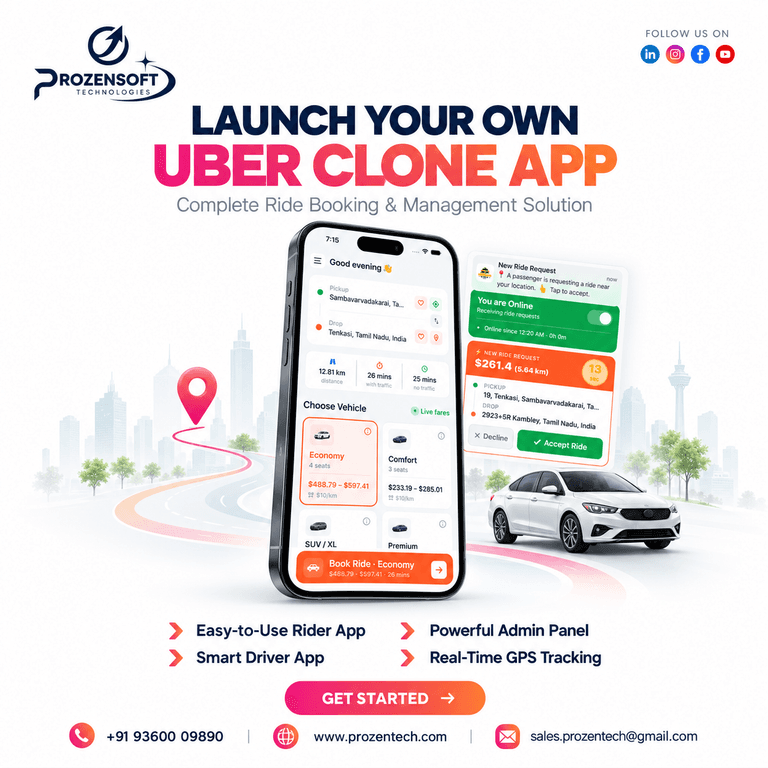
A strong rider application can allow users to:
- Create and manage accounts
- Set pickup and destination locations
- View available vehicle categories
- Check estimated fares
- Book rides instantly
- Schedule rides for later
- Track nearby drivers
- View driver information
- Make online payments
- Apply coupons
- Manage wallet balances
- View ride history
- Rate drivers
The overall user journey should require as few steps as possible.
For example:
Choose Location → Select Vehicle → Check Fare → Confirm Ride → Track Driver → Complete Payment
When the interface is clear and responsive, customers are more likely to continue using the platform.
Location accuracy also matters.
Integration with mapping services can help with route calculation, pickup positioning, estimated distance, and travel time.
Empowering Drivers with the Right Technology
Drivers are the operational backbone of every ride-hailing business.
A dedicated driver application helps them manage rides without depending on manual coordination.
The driver app can provide features such as:
- Registration and profile management
- Document submission
- Vehicle information
- Online and offline availability
- Incoming ride requests
- Pickup navigation
- Customer contact options
- OTP-based ride start
- Trip completion
- Earnings dashboard
- Wallet balance
- Withdrawal requests
- Ride history
- Customer ratings
Driver onboarding can also include an approval process.
For example, a driver may submit identity documents, licence information, and vehicle details. The administrator can review the documents before allowing the driver to accept rides.
This improves platform control and helps businesses maintain operational standards.
An effective Uber Clone should create a balanced experience where customers can easily find rides while drivers receive clear ride requests and transparent earnings information.
Centralized Business Control Through an Admin Panel
Behind every successful ride-booking platform is a powerful administration system.
The admin dashboard gives business owners visibility into the entire operation.
Administrators can manage:
Customers
View accounts, ride activity, wallet transactions, and support-related information.
Drivers
Approve registrations, verify documents, monitor availability, manage driver accounts, and review performance.
Vehicle Categories
Configure categories such as:
- Economy
- Sedan
- SUV
- Premium
- Van
- Bike taxi
Pricing can be configured differently for each category.
Ride Management
Admins can monitor ongoing, completed, cancelled, and scheduled rides.
Pricing
Businesses can configure:
- Base fare
- Per-kilometre pricing
- Per-minute charges
- Minimum fare
- Waiting charges
- Cancellation fees
- Surge pricing
Commission Management
The platform can automatically calculate the business commission and driver earnings for every ride.
Reports
Revenue, bookings, driver performance, payments, and customer activity can be analyzed through dashboards and reports.
This centralized administration makes it easier to operate a growing mobility business.
Payments, Tracking and Automation That Improve Operations
Three areas strongly influence the quality of a ride-hailing platform: payments, tracking, and automation.
Real-Time Tracking
GPS tracking helps riders monitor the driver's location before pickup and during the ride.
Drivers can also receive navigation assistance for reaching customers and destinations.
Digital Payments
Depending on the target market, businesses can integrate:
- Credit cards
- Debit cards
- Digital wallets
- Local payment gateways
- Cash payments
- Platform wallet credits
Automatic payment handling reduces manual reconciliation and provides better transaction records.
Wallet and Referral Systems
Businesses can encourage customer retention through referral rewards and wallet credits.
For example, when an existing customer invites a new user, both users can receive promotional credits based on configurable rules.
Notifications
Push notifications can inform users about:
- Driver acceptance
- Driver arrival
- Ride start
- Ride completion
- Payment confirmation
- Promotions
- Scheduled ride reminders
Automation improves communication while reducing the workload on customer support teams.
How to Build a Ride-Hailing Platform That Can Scale
The biggest mistake businesses can make is building only for today's requirements.
A mobility platform should also support future growth.
A scalable architecture can make it easier to expand into:
- Additional cities
- Multiple countries
- New vehicle categories
- Corporate transportation
- Airport transfers
- Rental services
- Delivery services
- Subscription models
- Fleet partnerships
Localization can also be important for businesses targeting international markets.
A platform may require support for:
- Multiple languages
- Multiple currencies
- Regional payment gateways
- Local pricing rules
- Different tax structures
- Right-to-left languages
Security and performance should also be considered from the beginning.
Customer information, driver documents, locations, payments, and transaction details need to be handled responsibly.
At Prozensoft Technologies, we build customizable ride-hailing solutions designed around the operational model of each business.
Our solution can include:
✅ Rider Application
✅ Driver Application
✅ Admin Dashboard
✅ Real-Time GPS Tracking
✅ Instant & Scheduled Booking
✅ Multiple Vehicle Categories
✅ Fare Calculation
✅ Wallet & Referral System
✅ Payment Gateway Integration
✅ Driver Earnings & Withdrawals
✅ Ratings & Reviews
✅ Reports & Analytics
✅ Multi-Language Support
✅ Custom Branding
The objective is not simply to replicate an existing taxi application.
The goal is to create an Uber Clone platform that reflects your brand, market, pricing strategy, and long-term mobility business model.
Frequently Asked Questions
1. What is an Uber Clone?
An Uber Clone is a customizable ride-hailing software platform that provides functionality similar to modern taxi-booking applications while allowing businesses to use their own branding, pricing, service locations, and operational rules.
2. What applications are required for a taxi booking platform?
A complete system normally includes a Rider App, Driver App, and Admin Dashboard. Additional web applications or business portals can also be developed depending on the project.
3. Can I customize vehicle categories and pricing?
Yes. Businesses can configure vehicle categories and define different base fares, distance charges, waiting fees, cancellation charges, and other pricing rules.
4. Can customers schedule rides in advance?
Yes. The platform can support both immediate ride booking and scheduled bookings based on the business model.
5. Can multiple payment gateways be integrated?
Yes. Payment integrations can be customized according to the target country and available payment providers.
6. Can the platform support multiple cities?
Yes. A scalable solution can be configured for multiple cities, service zones, vehicle categories, pricing structures, and driver networks.
7. Can the app use my own company branding?
Yes. The application can be customized with your company name, logo, brand colors, content, and other visual elements.