What Is Healthcare App Development?
Section Content
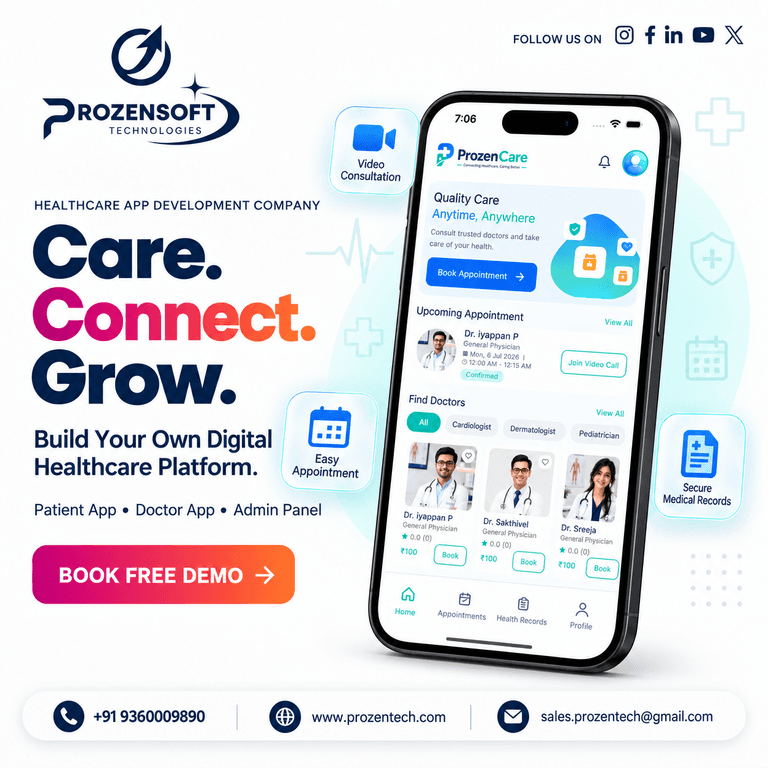
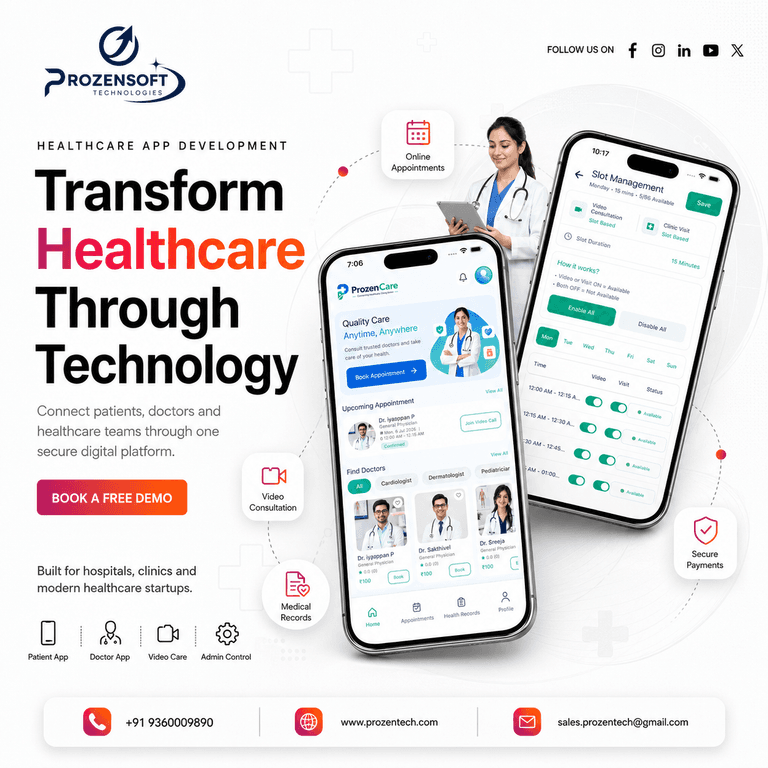
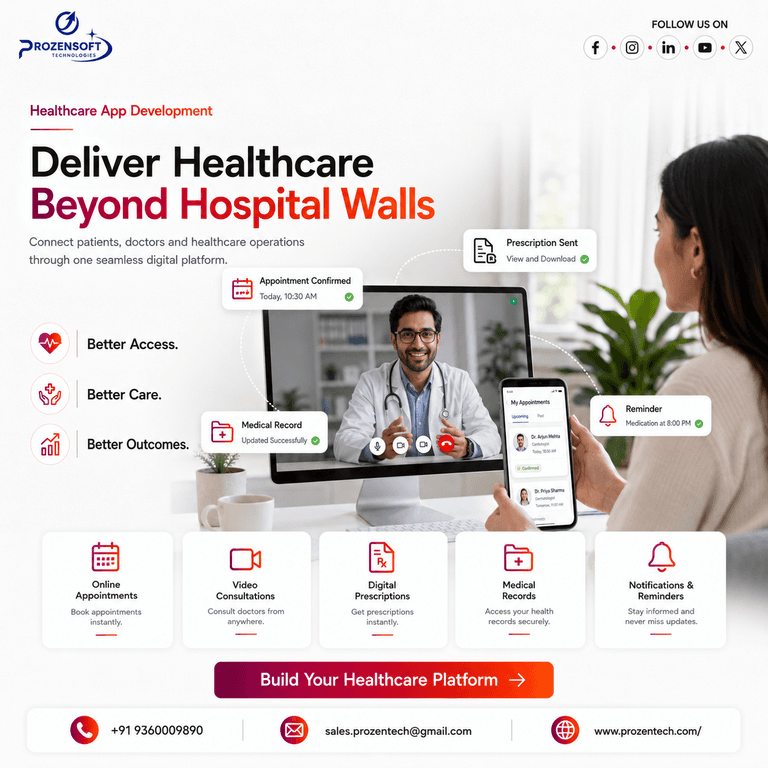
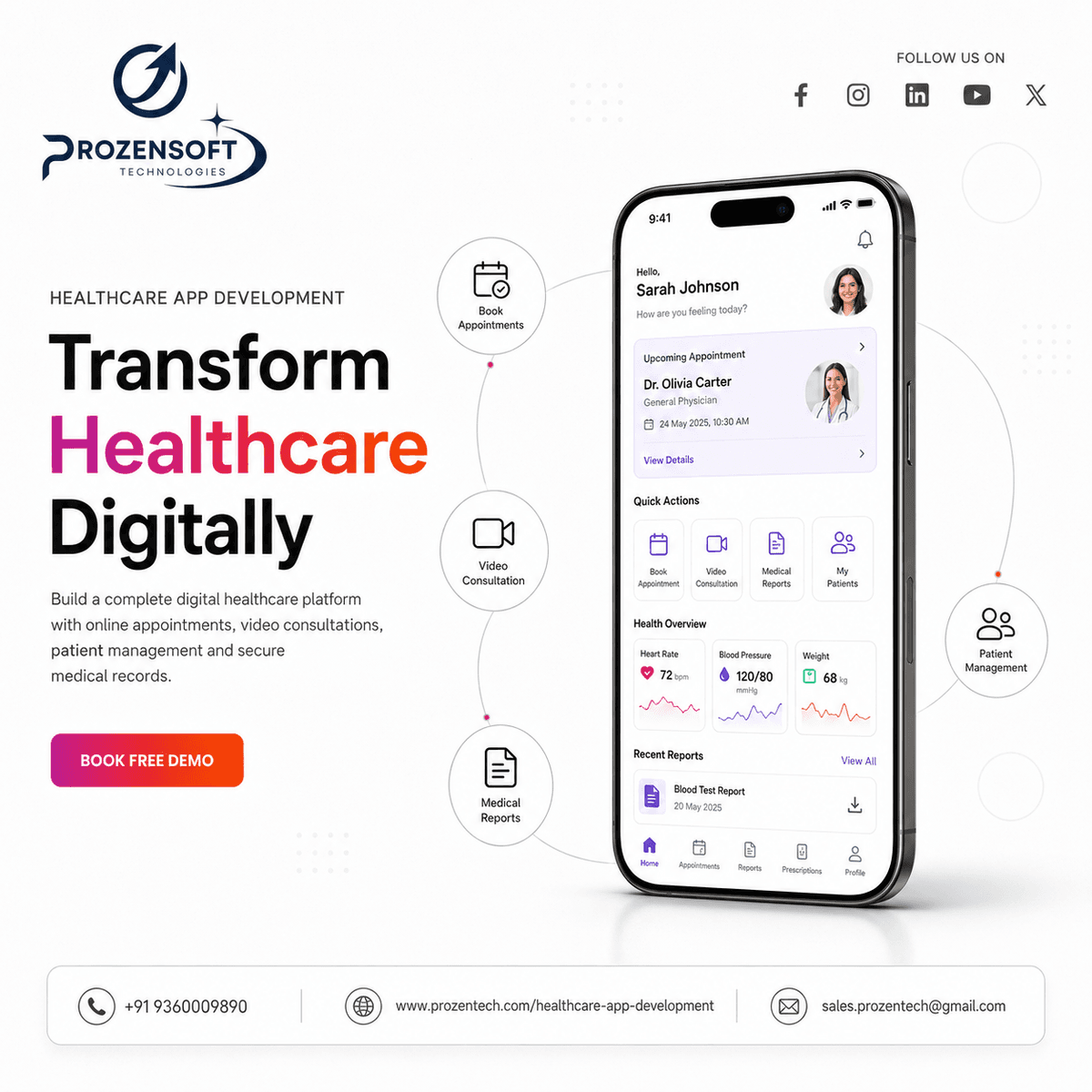
Healthcare App Development is the process of creating secure digital platforms that connect patients, doctors, clinics, hospitals, and administrators. These applications simplify essential healthcare activities such as finding doctors, booking appointments, attending video consultations, making payments, and accessing medical reports.
A complete healthcare platform can include separate applications and dashboards for every participant:
- Patient mobile application
- Doctor mobile application
- Hospital or clinic admin dashboard
- Super-admin management portal
- Web-based appointment platform
- Telemedicine and video consultation system
Unlike generic software, a custom healthcare application can be designed around the exact workflow of a hospital, clinic, diagnostic centre, or healthcare startup. Its branding, departments, doctor profiles, appointment duration, consultation charges, commission structure, and payment methods can all be customized.
The result is a connected digital healthcare ecosystem that makes medical services more convenient for patients and easier for healthcare organizations to manage.
Essential Features of a Patient Healthcare App
A patient application should make healthcare services easy to discover and access. Patients must be able to register securely, browse medical specialties, compare doctor profiles, check appointment availability, and reserve a suitable time slot.
Important patient app features include:
- Email, mobile number, or social login
- Doctor search by specialty, hospital, and location
- Doctor profiles with qualifications and experience
- Real-time appointment slot availability
- Clinic visits and video consultation options
- Secure online payment integration
- Appointment reminders and notifications
- Digital prescriptions and medical reports
- Appointment and payment history
- Ratings, reviews, and support assistance
Video consultation is particularly valuable for patients who cannot travel easily or live far from a medical facility. It allows them to speak with healthcare professionals using a secure audio and video connection.
Patients can also receive their medical records digitally instead of collecting printed documents from the hospital. This creates a faster and more convenient healthcare experience while helping hospitals extend their services beyond physical locations.
Doctor App and Hospital Management Capabilities
Doctors require a dedicated application that gives them control over their daily schedules and consultations. They should be able to update their availability, view appointments, access relevant patient information, conduct video consultations, and submit medical reports.
A doctor application can provide:
- Secure doctor login and profile management
- Availability and appointment slot controls
- Upcoming and completed appointment lists
- Clinic and video consultation management
- Patient information and consultation history
- Prescription and medical report submission
- Leave request and schedule management
- Consultation earnings overview
- Real-time appointment notifications
The hospital admin dashboard provides centralized control over the entire platform. Administrators can add multiple hospitals, branches, departments, specialties, and doctors. They can also configure consultation fees separately for each doctor or branch.
If the platform follows a commission-based model, the administrator can define how each appointment payment is distributed. For example, a percentage can be retained by the hospital while the remaining amount is allocated to the doctor.
Administrators can monitor registrations, bookings, payments, cancellations, refunds, reports, and platform performance from one dashboard.
Business Benefits of a Custom Healthcare Platform
Professional Healthcare App Development helps medical organizations improve patient engagement while reducing manual administrative work. Routine activities that previously required phone calls, paperwork, or in-person visits can be handled through a connected digital platform.
The major benefits include:
- Convenient healthcare access for patients
- Reduced waiting time and reception workload
- Better appointment and schedule management
- Wider reach through online consultations
- Centralized management of multiple branches
- Secure digital medical record access
- Improved communication between doctors and patients
- Additional revenue from remote consultations
- Valuable operational reports and analytics
- Stronger digital presence for the healthcare brand
A custom platform also gives the healthcare organization complete control over its branding and workflow. The app can use the hospital’s name, logo, colors, policies, service categories, and pricing model.
As the organization grows, new hospitals, branches, doctors, specialties, and service locations can be added. Additional capabilities such as pharmacy delivery, laboratory bookings, insurance integration, subscription plans, and home healthcare services can also be introduced.
How to Build and Launch a Healthcare Application
The first stage of building a healthcare application is understanding the organization’s actual workflow. The development team should identify how patients register, how doctors are approved, how appointments are scheduled, how consultation payments are processed, and how medical documents are shared.
The next step is defining the required platform components. A hospital may need patient and doctor applications with an admin dashboard, while a healthcare startup may also require a super-admin portal for managing multiple healthcare providers.
The application should then be customized with the organization’s branding, departments, consultation types, appointment duration, pricing, commissions, payment gateway, notifications, and reporting requirements.
Security must remain a priority throughout development. Sensitive patient information should be protected through secure authentication, encrypted communication, access controls, regular backups, and responsible data management practices. The platform should also be designed according to the applicable healthcare and privacy requirements of its target market.
Before launch, the complete appointment flow must be tested—from doctor discovery and slot selection to payment, consultation, report submission, cancellation, and refund processing.
After deployment, performance should be monitored continuously. Patient feedback, appointment completion rates, doctor availability, popular specialties, and consultation demand can help the organization improve its services and plan future expansion.
FAQ
1. What applications are included in a healthcare platform?
A complete solution can include a patient application, doctor application, hospital admin dashboard, super-admin portal, backend system, and web-based appointment platform.
2. Can patients book both clinic and video consultations?
Yes. Patients can select an in-person clinic visit or an online video consultation based on the doctor’s configured availability and services.
3. Can multiple hospitals and branches be managed?
Yes. Administrators can manage multiple hospitals, branches, specialties, doctors, fees, bookings, and reports through a centralized dashboard.
4. Can doctors control their appointment availability?
Yes. Doctors can set their working hours, manage appointment slots, update their availability, and submit leave requests through the doctor application.
5. Does the application support online payments?
Yes. Secure payment gateways can be integrated for consultation fees. The system can also manage payment records, platform commissions, doctor earnings, cancellations, and refunds.
6. Can the healthcare application be customized?
Yes. The application’s name, logo, colors, features, workflow, specialties, consultation duration, pricing, payment methods, and revenue model can be customized.
7. How is patient information protected?
Patient information can be protected using secure authentication, encryption, permission-based access, protected APIs, activity monitoring, and secure cloud infrastructure. Required compliance measures depend on the target country.
8. Can pharmacy or laboratory services be added later?
Yes. Pharmacy delivery, diagnostic test booking, insurance support, electronic prescriptions, remote monitoring, and home healthcare services can be added as the platform expands.