On-Demand App Development: Transforming the Future of Digital Services
The digital economy has fundamentally changed how customers discover, access, and purchase everyday services. From booking a taxi and ordering food to purchasing groceries and scheduling home maintenance, customers increasingly expect businesses to deliver convenient experiences through mobile applications.
On-demand app development enables businesses to meet these expectations by connecting customers, service providers, merchants, and delivery partners through a centralized digital platform.
Unlike traditional business models that depend heavily on physical locations and manual communication, on-demand applications allow customers to request services whenever they need them, based on service availability and location.
For entrepreneurs, startups, and established enterprises, this creates opportunities to reach new markets, improve operational efficiency, and develop additional revenue streams.
What Is On-Demand App Development?
On-demand app development is the process of designing, developing, and deploying digital applications that allow customers to request products or services through an online platform.
These applications typically combine customer-facing interfaces, service provider management, real-time communication, digital payments, location-based services, and centralized administrative controls.
A well-designed on-demand platform simplifies the entire customer journey, from discovering a service to completing a transaction.
Why Are On-Demand Applications Important?
Modern customers increasingly prioritize:
-
Convenient access to products and services
-
Transparent pricing
-
Flexible booking and delivery options
-
Secure digital payments
-
Real-time service updates
-
Personalized customer experiences
-
Reliable customer support
Businesses that address these expectations through technology can create more accessible and competitive service experiences.
Benefits of On-Demand App Development for Businesses
-
Expanded market reach
-
Improved customer engagement
-
Reduced dependency on manual processes
-
Centralized business operations
-
Better service coordination
-
Opportunities for recurring revenue
-
Data-driven business decisions
-
Support for geographical expansion
However, building a successful on-demand business requires more than developing a mobile application. It requires a clear business strategy, dependable service providers, efficient operations, and technology that supports long-term growth.
The real value of on-demand app development lies in transforming traditional service delivery into a connected, customer-centric digital ecosystem.
Types of On-Demand Applications Across Different Industries
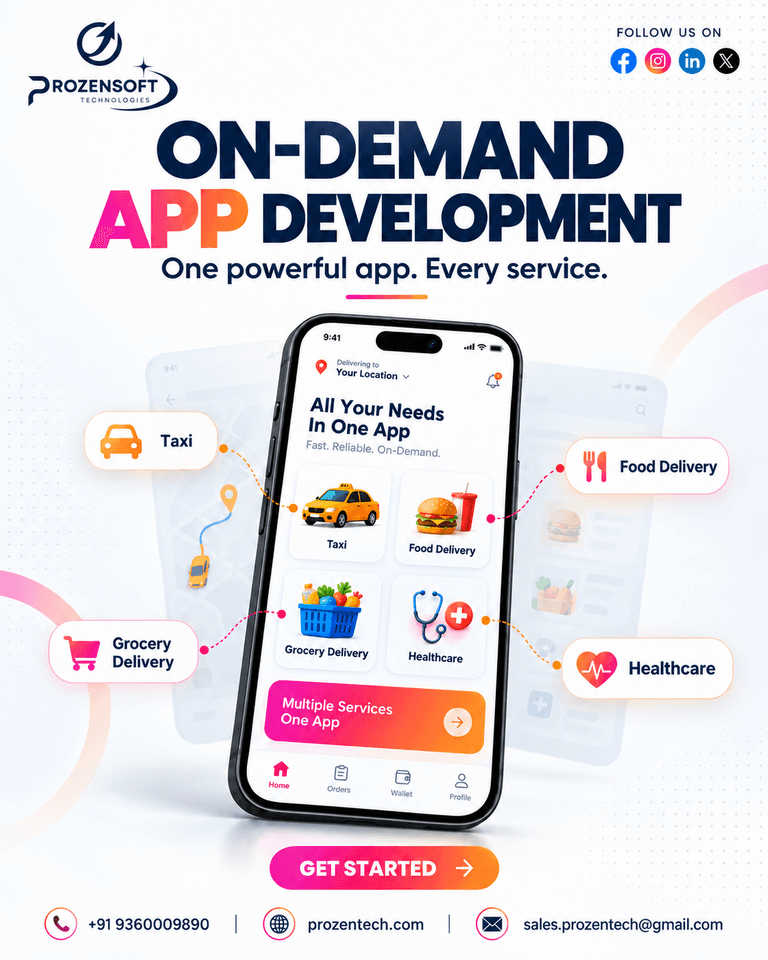
One of the greatest advantages of on-demand app development is its adaptability across multiple industries. Businesses can develop specialized applications for individual services or create integrated platforms that offer multiple services within a single digital ecosystem.
Selecting the right application model depends on market demand, target customers, operational capabilities, investment capacity, and long-term business objectives.
1. Taxi and Ride-Hailing Applications
On-demand taxi applications connect passengers with available drivers through location-based booking systems.
Common features include:
-
Real-time ride booking
-
Driver matching
-
GPS tracking
-
Automated fare calculations
-
Multiple vehicle categories
-
Digital payments
-
Driver earnings management
These platforms are suitable for taxi operators, transportation companies, mobility startups, and regional ride-hailing businesses.
2. Food Delivery Applications
Food delivery applications connect customers with restaurants and delivery partners.
Businesses can develop single-restaurant applications, multi-branch restaurant platforms, or multi-vendor food delivery marketplaces.
Essential capabilities include digital menus, order management, delivery tracking, promotional offers, and restaurant dashboards.
3. Grocery Delivery Applications
Grocery delivery platforms allow customers to purchase daily essentials, fresh produce, household products, and other retail items through mobile applications.
These solutions can support supermarkets, local grocery stores, retail chains, and online grocery marketplaces.
Inventory management, product availability, delivery scheduling, and order fulfillment are important components of successful grocery delivery operations.
4. Pharmacy Delivery Applications
Pharmacy delivery applications help eligible businesses provide convenient access to permitted healthcare products and medicines.
Depending on regional regulations, these platforms may require prescription verification, licensed pharmacy participation, secure customer information management, and restricted product controls.
5. Home Services Applications
Home services platforms connect customers with professionals offering services such as:
-
Home cleaning
-
Plumbing
-
Electrical repairs
-
Appliance servicing
-
Air conditioning maintenance
-
Painting
-
General property maintenance
These applications can support scheduled appointments, professional availability, service pricing, customer reviews, and provider management.
6. Parcel and Courier Delivery Applications
On-demand parcel delivery platforms help individuals and businesses arrange local or regional deliveries.
Important features include pickup and drop-off locations, delivery estimates, driver assignments, live tracking, and proof of delivery.
7. Laundry and Dry Cleaning Applications
Laundry applications enable customers to schedule garment pickup, select laundry services, make payments, and track order progress.
Businesses can integrate store management, delivery coordination, subscription plans, and customer loyalty programs.
8. Healthcare and Doctor Appointment Applications
Healthcare applications can help patients discover healthcare providers, schedule appointments, receive reminders, and access supported digital consultation services.
These platforms must be designed with appropriate privacy, security, and regional healthcare compliance requirements.
9. Car Rental Applications
Car rental platforms allow customers to browse available vehicles, select rental periods, review pricing, submit required documents, and manage reservations.
Fleet availability, rental agreements, payment management, and vehicle maintenance can be integrated into centralized management systems.
10. Multi-Service Super Applications
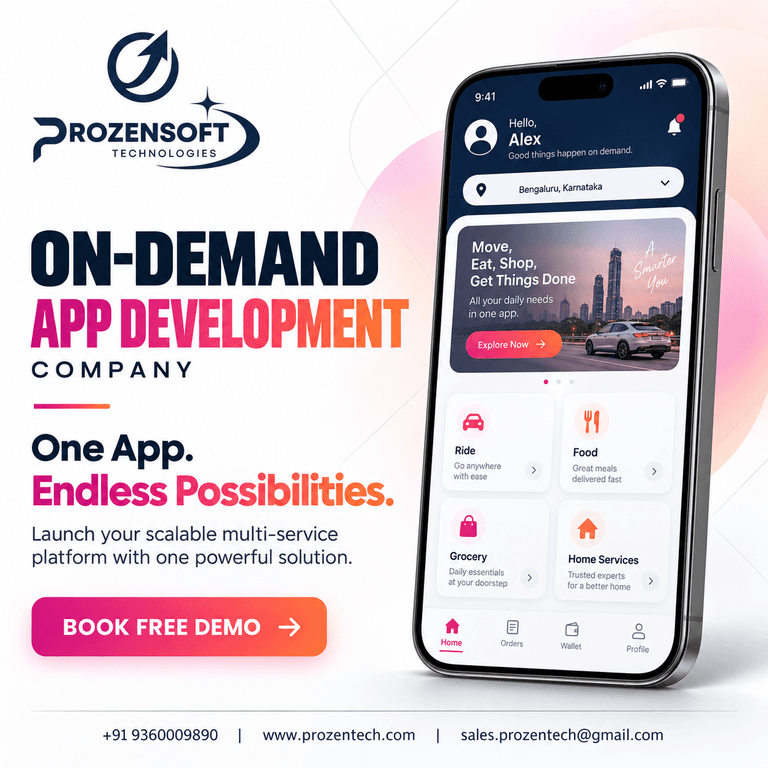
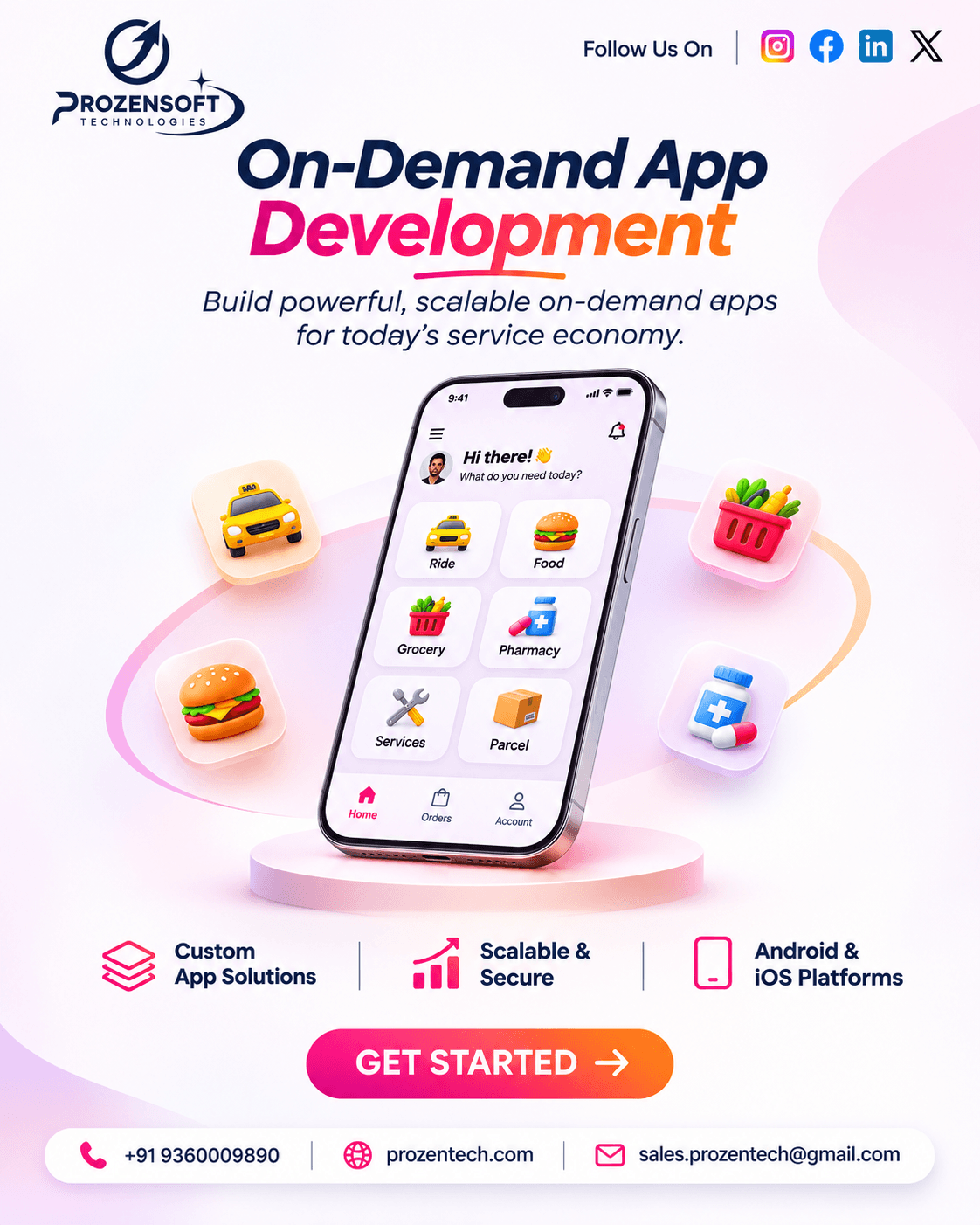
A super app combines multiple services within one application.
Instead of requiring separate applications for transportation, food delivery, grocery shopping, pharmacy purchases, and parcel delivery, customers can access these services through a unified platform.
This model creates opportunities for cross-service customer engagement and diversified revenue streams.
The most suitable on-demand application is not necessarily the one with the largest number of features. It is the one that effectively solves a genuine customer problem while supporting a sustainable business model.
Must-Have Features for a Modern On-Demand App Development Solution
A successful on-demand platform requires more than an attractive customer application. It must connect every participant in the service ecosystem through reliable and coordinated digital workflows.
Depending on the business model, the platform may include a customer application, service provider or merchant application, delivery partner application, and centralized administrative dashboard.
Customer Application Features
The customer application serves as the primary interface between the business and its customers.
Essential features include:
-
Secure registration and login
-
Location detection and address management
-
Service and product discovery
-
Advanced search and filtering
-
Transparent pricing information
-
Instant and scheduled bookings
-
Multiple payment options
-
Real-time order and service tracking
-
Booking and order history
-
Promotional offers and coupons
-
Ratings and reviews
-
Push notifications
-
Customer support
The customer experience should minimize unnecessary steps and make it easy to complete a transaction.
Merchant and Service Provider Features
Merchants and service providers require dedicated tools to manage their daily operations.
Important capabilities include:
-
Merchant registration and onboarding
-
Business profile management
-
Product and service management
-
Pricing configuration
-
Availability management
-
Incoming order and booking management
-
Order acceptance and rejection
-
Service status updates
-
Inventory management where applicable
-
Earnings and transaction reports
-
Settlement information
-
Customer feedback management
A well-designed merchant interface can improve service coordination and reduce dependency on manual communication.
Driver and Delivery Partner Features
For transportation and delivery businesses, driver applications play an important role in operational efficiency.
Common features include:
-
Driver registration and verification
-
Online and offline availability
-
Ride or delivery request notifications
-
GPS navigation
-
Pickup and drop-off information
-
Trip and delivery status updates
-
Delivery confirmation
-
Earnings dashboards
-
Completed service history
-
Support and emergency assistance options
Driver assignment systems can be configured according to location, availability, vehicle type, service requirements, and business rules.
Administrative Dashboard Features
The administrative dashboard provides business owners with centralized visibility and control.
Key features may include:
-
Customer management
-
Merchant and service provider management
-
Driver management
-
Order and booking monitoring
-
Service category management
-
Vehicle category configuration
-
Commission management
-
Delivery zone configuration
-
Pricing and fare management
-
Promotional campaign management
-
Payment and settlement monitoring
-
Complaint and refund management
-
Business analytics
-
Role-based access controls
-
Multi-location management
Advanced Features for Growing Platforms
As the business expands, additional capabilities may include:
-
Multi-language support
-
Multi-currency support
-
Subscription and membership programs
-
Referral and loyalty systems
-
Automated service assignments
-
Dynamic pricing rules
-
In-app communication
-
Digital wallet functionality where permitted
-
Fraud detection mechanisms
-
Advanced business intelligence dashboards
-
Multi-country operational configuration
Every feature should serve a clear operational or customer experience objective.
The goal of on-demand app development is not simply to create multiple applications, but to establish a connected digital infrastructure that supports the complete service lifecycle.
How On-Demand Applications Generate Revenue and Build Sustainable Businesses
A successful on-demand application requires a business model that balances customer affordability, service provider profitability, operational expenses, and platform revenue.
Developing a feature-rich application without a sustainable monetization strategy can create significant challenges during business expansion.
Commission-Based Revenue Model
The commission model is commonly used by multi-vendor marketplaces, ride-hailing platforms, and service booking applications.
The platform earns a percentage or fixed amount from each completed transaction.
Commission rates should be determined by considering service provider margins, customer pricing expectations, and platform operating costs.
Delivery and Convenience Fees
Businesses can generate revenue through delivery charges, booking fees, or convenience fees.
These charges may be calculated using:
-
Delivery distance
-
Order value
-
Service category
-
Delivery urgency
-
Vehicle requirements
-
Operational location
Pricing should remain transparent throughout the customer journey.
Subscription and Membership Plans
Subscription models allow businesses to generate recurring revenue while offering additional benefits to customers.
Potential membership benefits include discounted delivery fees, exclusive offers, priority bookings, and recurring service packages.
Subscription pricing should reflect the actual cost of providing these benefits.
Merchant Subscription Model
Multi-vendor platforms can offer subscription packages to merchants and service providers.
These packages may include enhanced business management tools, additional reporting capabilities, promotional visibility, and access to premium platform features.
Sponsored Listings and Advertising
Established platforms with sufficient customer traffic can offer promotional placements to merchants and service providers.
Revenue opportunities include featured listings, sponsored products, promotional banners, and clearly identified paid placements.
Premium and Express Services
Customers may be willing to pay additional charges for faster delivery, priority bookings, premium vehicle categories, or specialized service options.
These services should be introduced only when the business has sufficient operational capacity to fulfill them reliably.
Direct Product and Service Revenue
Businesses operating their own inventory, fleet, or service teams can generate revenue directly from customer purchases.
This model provides greater control over pricing and service quality but may require higher operational investment.
Understanding On-Demand Business Unit Economics
Unit economics help businesses understand whether individual transactions contribute positively to overall profitability.
Important metrics include:
-
Average order value
-
Platform revenue per transaction
-
Customer acquisition cost
-
Customer lifetime value
-
Service provider commissions
-
Payment processing fees
-
Delivery and fulfillment costs
-
Promotional expenses
-
Customer retention rate
-
Contribution margin per order
A simplified calculation is:
Contribution Margin per Order = Net Platform Revenue − Variable Costs per Order
For example, consider a marketplace transaction worth $30.
-
Platform commission at 20%: $6
-
Delivery fee retained by the platform: $3
-
Total platform revenue: $9
-
Delivery partner payment: $4
-
Payment processing cost: $1
-
Platform-funded promotional expense: $1
The estimated contribution margin is $3 per order before fixed expenses and other applicable costs.
This example is illustrative. Actual margins depend on the business model, market conditions, pricing, taxes, and operating expenses.
Building a Sustainable Revenue Strategy
Businesses should prioritize:
-
Increasing repeat customer transactions
-
Improving service provider retention
-
Reducing unnecessary promotional expenses
-
Optimizing delivery operations
-
Maintaining competitive pricing
-
Monitoring profitability across service categories
A sustainable on-demand business is built by generating meaningful value from each transaction, rather than focusing exclusively on downloads or order volume.
Technology Stack for Building Secure and Scalable On-Demand Applications
The technology architecture behind an on-demand App Development directly influences its performance, reliability, security, and ability to support future expansion.
Choosing the right technology stack requires an understanding of business requirements, expected transaction volumes, integration complexity, and long-term maintenance needs.
Mobile Application Development
React Native provides a cross-platform development approach for building Android and iOS applications.
It allows businesses to develop customer, merchant, and driver applications while sharing significant portions of the application codebase.
Potential advantages include:
-
Efficient cross-platform development
-
Consistent user experiences
-
Reusable application components
-
Simplified maintenance
-
Support for native device capabilities
Frontend Development
React.js and Next.js can be used to develop administrative dashboards, merchant portals, customer-facing websites, and business management interfaces.
Responsive interfaces allow administrators and merchants to manage operations across desktop and mobile devices.
Backend Development
Node.js and Express.js can provide the backend foundation for on-demand platforms.
The backend is responsible for managing:
-
User authentication
-
Service requests
-
Order processing
-
Driver and merchant assignments
-
Pricing calculations
-
Payment workflows
-
Business rules
-
Administrative operations
-
Third-party integrations
A modular backend architecture can help businesses introduce new services without unnecessarily rebuilding existing functionality.
Database Management
MongoDB can support flexible data models for customers, products, merchants, orders, drivers, and service categories.
Database architecture should include appropriate indexing, validation, access controls, backups, and transaction handling.
For payment and financial records, additional attention must be given to consistency, reconciliation, and auditability.
Real-Time Communication
Socket.IO and WebSocket technologies can support real-time communication between customers, drivers, merchants, and administrators.
Potential applications include:
-
Live driver location updates
-
Order status changes
-
Ride request notifications
-
Delivery tracking
-
Service assignment updates
-
Operational alerts
Real-time communication should be supported by reliable reconnection mechanisms and appropriate access controls.
Maps and Geolocation Integration
Mapping and location services are essential for location-based on-demand businesses.
These integrations can support:
-
Customer address selection
-
Driver location tracking
-
Distance calculations
-
Route navigation
-
Service coverage zones
-
Estimated arrival times
-
Nearby merchant discovery
Businesses should evaluate mapping provider availability, regional accuracy, usage limits, and recurring costs.
Payment Gateway Integration
On-demand applications can integrate payment providers based on target markets and supported transaction methods.
Payment architecture may include online payments, refunds, transaction verification, merchant settlements, and payment reconciliation.
Sensitive payment information should be handled through appropriate payment provider integrations rather than unnecessarily stored within the application.
Cloud Hosting and Infrastructure
Cloud infrastructure can support backend applications, databases, media storage, real-time communication services, and administrative platforms.
Infrastructure planning should consider:
-
HTTPS and secure communication
-
Load balancing
-
Database backups
-
Application monitoring
-
Resource scaling
-
Disaster recovery
-
Environment separation
-
Automated deployment processes
Security and Data Protection
A reliable on-demand platform should incorporate:
-
Secure authentication
-
Password hashing
-
Role-based authorization
-
API rate limiting
-
Input validation
-
Secure session management
-
Data encryption where appropriate
-
Activity logging
-
Regular security updates
Location tracking and personal information must be managed according to applicable privacy requirements.
The ideal technology architecture is not necessarily the most complex. It is the architecture that reliably supports current operations while providing a practical foundation for future business growth.
On-Demand App Development Process, Investment and Market Launch
Developing an on-demand application is a strategic business initiative that requires careful planning, technical execution, operational preparation, and continuous improvement.
A structured development process helps businesses reduce unnecessary complexity and align technology investment with measurable objectives.
Step 1: Market Research and Business Validation
Before development begins, businesses should identify the problem they intend to solve.
Market research should evaluate:
-
Target customer segments
-
Existing competitors
-
Customer expectations
-
Service availability
-
Regional pricing
-
Operational challenges
-
Potential revenue opportunities
Validating demand before making a significant investment can reduce the risk of building a platform that does not meet market requirements.
Step 2: Business Model and Requirement Planning
The next stage involves defining how the platform will operate.
Important decisions include:
-
Single-service or multi-service platform
-
Single-vendor or multi-vendor model
-
Target geographical locations
-
Commission and pricing structures
-
Service provider onboarding
-
Payment and settlement processes
-
Delivery and fulfillment workflows
These decisions form the foundation of the software development requirements.
Step 3: UI/UX Design
The design phase focuses on creating intuitive and visually consistent experiences for customers, merchants, drivers, and administrators.
Wireframes and interactive prototypes can help businesses evaluate booking workflows, navigation, service discovery, and transaction processes before development.
Step 4: Application and Backend Development
During development, mobile applications, backend services, databases, administrative dashboards, and third-party integrations are implemented.
A modular development approach can support future improvements and additional service categories.
Step 5: Testing and Quality Assurance
Testing should evaluate both technical performance and real-world business workflows.
Important testing activities include:
-
Functional testing
-
Payment workflow testing
-
GPS and location testing
-
Order assignment testing
-
Application compatibility testing
-
Performance testing
-
Security testing
-
User acceptance testing
Real-world pilot testing is especially important for location-based delivery and transportation applications.
Step 6: Deployment and Market Launch
Once the platform is ready, applications can be prepared for submission to the Google Play Store and Apple App Store.
Backend infrastructure, payment systems, administrative access, merchant onboarding, and customer support processes should also be prepared before commercial launch.
App publication remains subject to the respective platform's review requirements.
Step 7: Post-Launch Optimization
After launch, businesses should monitor customer behavior, technical performance, operational issues, and financial metrics.
Customer feedback can help identify improvements in pricing, service availability, booking workflows, and application usability.
How Much Does On-Demand App Development Cost?
Development costs vary depending on the business model and technical requirements.
Major cost factors include:
-
Number of mobile applications
-
UI/UX design complexity
-
Number of service categories
-
Backend architecture
-
Administrative dashboard requirements
-
Real-time tracking functionality
-
Payment gateway integrations
-
Third-party API requirements
-
Custom business workflows
-
Infrastructure and maintenance requirements
A basic single-service MVP generally requires less development effort than a multi-vendor marketplace or multi-service super app.
Businesses should also consider recurring expenses such as hosting, mapping services, notification services, payment processing, maintenance, and customer support.
Recommended Launch Strategy
Rather than launching every service across multiple cities simultaneously, businesses can consider a phased approach.
Phase 1: Minimum Viable Product
Launch essential functionality within a limited service area.
Phase 2: Operational Optimization
Improve service quality, customer retention, provider availability, and transaction reliability.
Phase 3: Business Expansion
Introduce additional locations, service categories, advanced features, and promotional programs based on validated demand.
This approach allows businesses to evaluate operational performance before committing significant resources to expansion.
A successful launch is not defined only by application availability. It is defined by the ability to consistently deliver valuable services to customers.
The Future of On-Demand App Development and Building Your Platform with ProzenSoft Technologies
The on-demand economy continues to evolve as businesses explore more connected, automated, and personalized service experiences.
Future-ready platforms must be designed to adapt to changing customer expectations, emerging technologies, and new business opportunities.
Artificial Intelligence and Intelligent Automation
Artificial intelligence can support various aspects of on-demand operations, including:
-
Personalized service recommendations
-
Customer support automation
-
Demand forecasting
-
Fraud detection
-
Intelligent service assignments
-
Operational performance analysis
These capabilities require suitable data, careful implementation, and ongoing evaluation to deliver meaningful business value.
Advanced Location-Based Services
Improved location-based technologies can help businesses coordinate service providers, optimize delivery routes, and provide more accurate service information.
These capabilities are particularly valuable for transportation, grocery delivery, food delivery, and courier businesses.
Multi-Service Super App Ecosystems
Businesses are increasingly exploring platforms that combine multiple services within a single customer experience.
A multi-service architecture can allow businesses to introduce additional services over time while maintaining shared customer accounts, payment integrations, notifications, and administrative controls.
However, successful super app expansion requires sufficient demand and operational readiness across each service category.
Personalized Customer Experiences
Customer behavior and transaction insights can help businesses develop more relevant recommendations, promotional campaigns, and loyalty programs.
Personalization should respect customer privacy and provide meaningful value rather than unnecessary promotional communication.
Sustainable and Efficient Operations
On-demand businesses can use technology to improve route planning, reduce unnecessary delivery journeys, monitor resource utilization, and make more informed operational decisions.
Efficiency improvements can support both business profitability and environmental objectives.
Why Choose ProzenSoft Technologies for On-Demand App Development?
At ProzenSoft Technologies, we develop customized digital platforms designed around the specific requirements of startups, entrepreneurs, and established businesses.
Our approach focuses on connecting business objectives with practical technology solutions.
Our On-Demand App Development Solutions
-
Taxi and ride-hailing app development
-
Food delivery app development
-
Grocery delivery app development
-
Pharmacy delivery app development
-
Parcel and courier delivery applications
-
Home services app development
-
Laundry and laundromat software
-
Car rental app development
-
Healthcare and doctor appointment applications
-
Multi-service super app development
What We Can Deliver
Customized Business Solutions
Applications designed around your business model, target audience, and operational requirements.
Android and iOS Applications
Cross-platform mobile solutions for customers, merchants, drivers, and service providers.
Centralized Administrative Management
Business management dashboards that support operational visibility and administrative control.
Scalable Architecture
Modular technology foundations designed to support future improvements and service expansion.
Third-Party Integrations
Supported payment gateways, mapping services, notifications, and other business-specific integrations.
Deployment and Technical Support
Assistance with application deployment, infrastructure configuration, and agreed post-launch support requirements.
Build a Multi-Service Platform with ProzenGo
ProzenGo represents our multi-service application approach, bringing core services such as food delivery, grocery delivery, pharmacy delivery, merchant services, taxi booking, and parcel delivery into a connected digital ecosystem.
Businesses can explore additional custom modules based on their requirements, operational model, and development scope.
Conclusion
On-demand app development is creating new opportunities for businesses to deliver services more efficiently, reach wider audiences, and build stronger customer relationships.
However, long-term success requires more than advanced technology. It requires a sustainable business model, dependable service quality, efficient operations, and continuous improvement.
By combining these fundamentals with a customized digital platform, businesses can establish a stronger foundation for sustainable growth.
Whether you are launching a new on-demand startup, digitalizing an existing business, or developing a multi-service super app, ProzenSoft Technologies can help transform your vision into a practical digital solution.
Your Vision. Your Brand. Your Digital Ecosystem.
ProzenSoft Technologies — Building Technology That Powers the Future of Business.
Frequently Asked Questions About On-Demand App Development
1. What is on-demand app development?
On-demand app development is the process of creating mobile and web applications that connect customers with products, services, merchants, drivers, or service providers. These platforms typically include online bookings, digital payments, real-time tracking, notifications, and centralized business management.
2. How much does it cost to develop an on-demand application?
The cost of developing an on-demand application depends on the business model, number of applications, required features, design complexity, backend architecture, and third-party integrations. A customized project assessment is necessary to determine an accurate development estimate.
3. How long does on-demand app development take?
The development timeline depends on project complexity, feature requirements, integrations, and testing. A basic MVP may take several weeks to a few months, while advanced multi-service platforms can require several months of development and testing.
4. What industries can benefit from on-demand app development?
Industries such as transportation, food delivery, grocery retail, pharmacy, home services, laundry, healthcare, car rental, courier delivery, and logistics can benefit from customized on-demand applications.
5. Can I launch multiple services within a single on-demand application?
Yes. A multi-service super app can integrate multiple service categories, such as taxi booking, food delivery, grocery delivery, pharmacy delivery, and parcel delivery, within one platform. Additional modules can be developed based on business requirements.
6. How do on-demand applications generate revenue?
On-demand applications can generate revenue through transaction commissions, delivery fees, convenience fees, subscriptions, merchant memberships, sponsored listings, premium services, and direct product or service sales.
7. What technology is used for on-demand app development?
Modern on-demand applications can be developed using technologies such as React Native, React.js, Next.js, Node.js, Express.js, MongoDB, Socket.IO, cloud infrastructure, payment gateways, and mapping services. The final technology stack depends on the project requirements.
8. Can an on-demand application support multiple cities and countries?
Yes. Applications can be designed to support multiple locations, languages, currencies, service zones, and region-specific pricing. International expansion also requires consideration of local regulations, payment availability, taxation, and operational requirements.
9. Can I customize an on-demand application with my own branding?
Yes. Customized on-demand applications can be developed with your business name, logo, brand colors, service categories, pricing structures, and operational workflows.
10. Does ProzenSoft Technologies provide on-demand app development services?
Yes. ProzenSoft Technologies provides customized on-demand app development solutions for businesses across multiple industries, including customer applications, merchant platforms, driver applications, administrative dashboards, and business-specific integrations.
Visit www.prozentech.com to discuss your project requirements.