Build a Modern Food Delivery App for Your Business
The food delivery industry continues to create strong opportunities for restaurants, startups, cloud kitchens, aggregators, and entrepreneurs looking to build digital-first businesses. A professional Food Delivery App Development solution allows businesses to manage customers, restaurants, orders, payments, delivery partners, and operational activities through one connected platform.
Instead of depending completely on third-party marketplaces, businesses can launch their own branded food delivery application and maintain better control over customer relationships, pricing, commissions, promotions, and service quality.
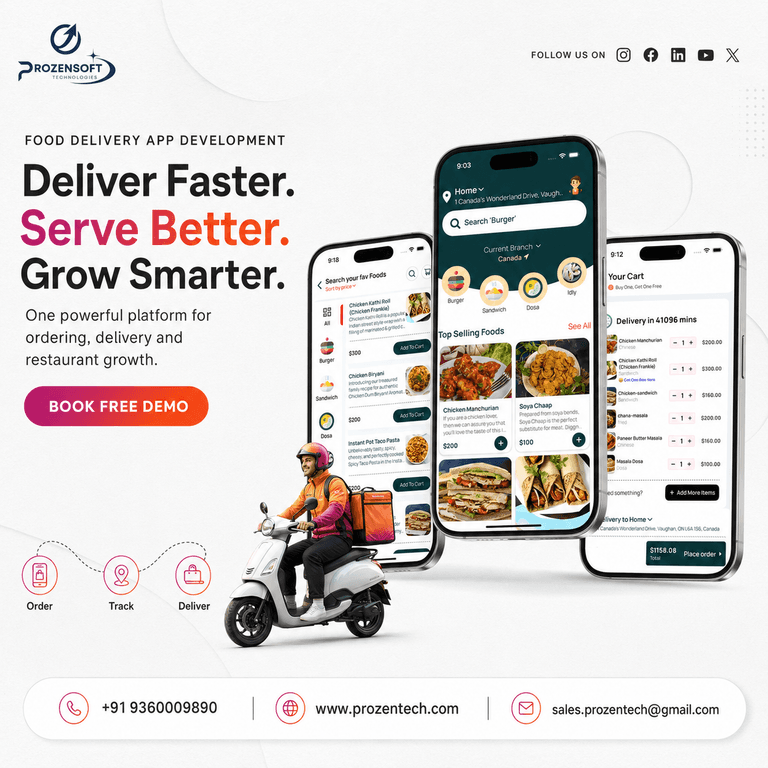
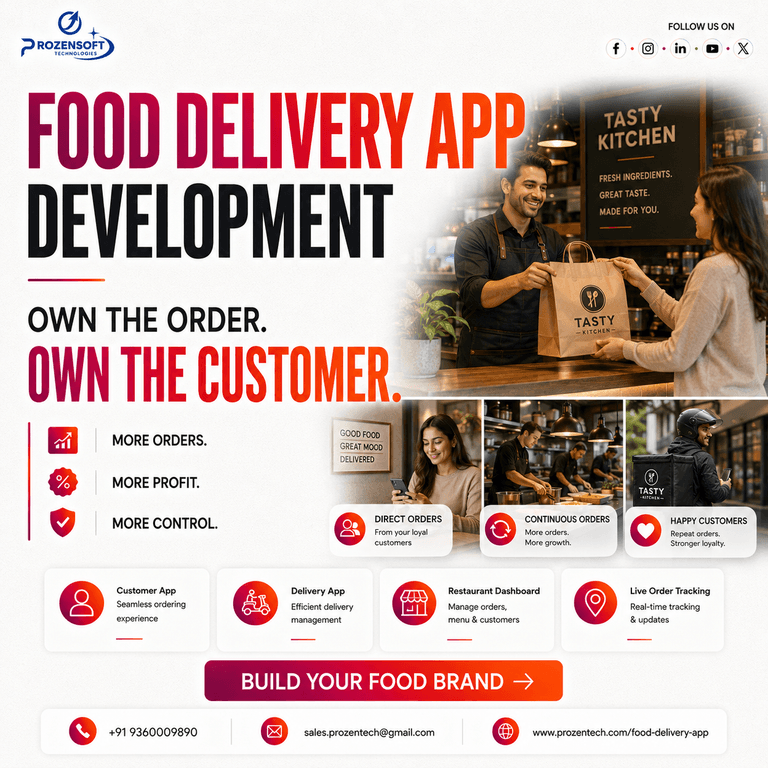
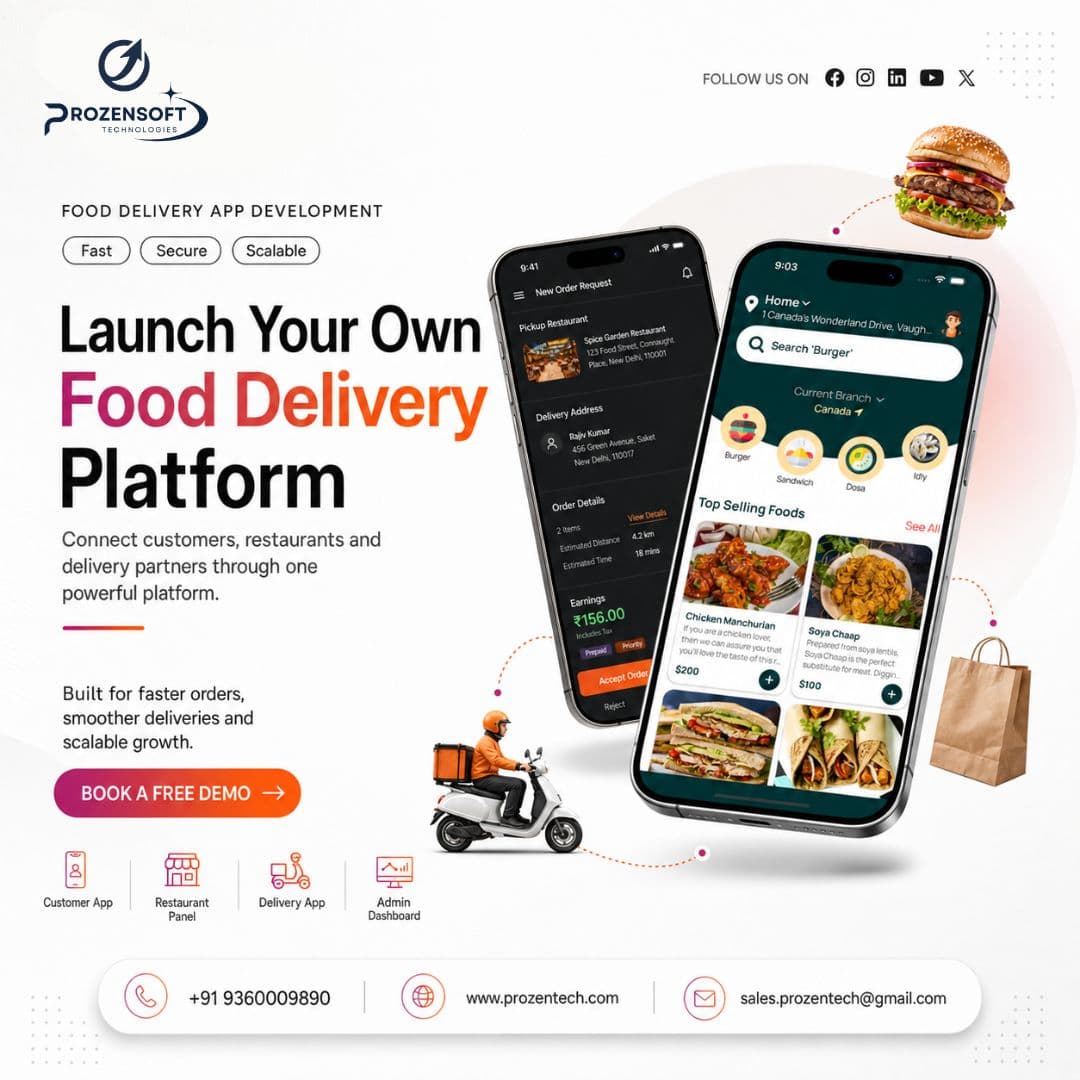
A complete food delivery ecosystem normally includes a customer application, restaurant panel, delivery partner application, admin dashboard, and optionally a responsive web ordering platform.
With the right architecture, businesses can start with a single city and gradually expand into multiple locations, restaurants, delivery zones, and service categories.
Customer App Designed for Fast and Easy Ordering
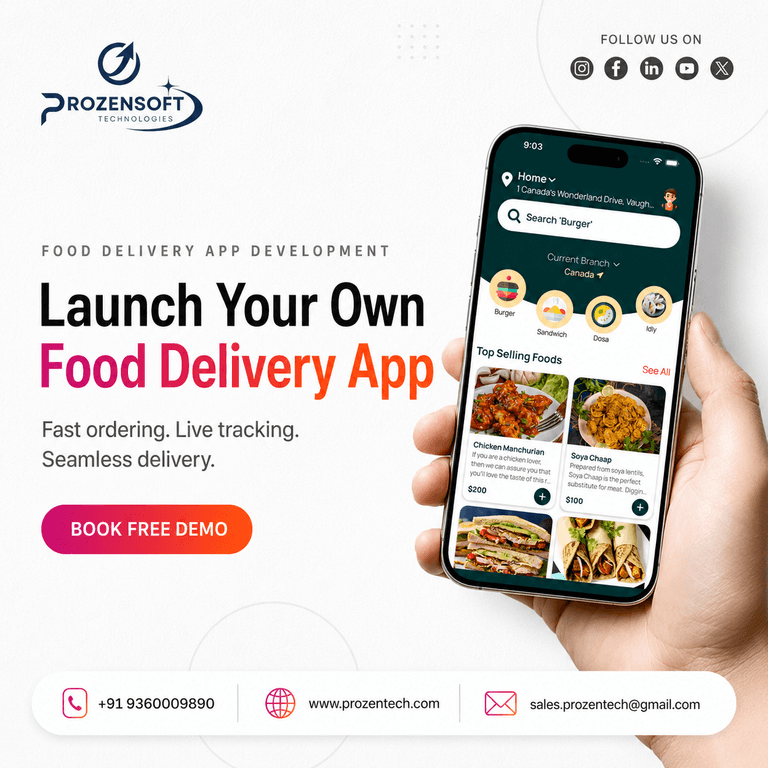
The customer application is one of the most important parts of any food delivery platform. Users expect a smooth ordering experience where they can quickly discover restaurants, explore menus, customize food items, complete payments, and track their deliveries.
A well-designed customer app can include restaurant search, cuisine filters, item categories, favorites, ratings, promotional offers, cart management, delivery addresses, and multiple payment methods.
Customers can choose their preferred restaurant, add dishes to the cart, customize available options, apply coupons, select a delivery address, and place an order within a few simple steps.
Real-time order updates can keep users informed when an order is confirmed, being prepared, picked up by the delivery partner, out for delivery, and successfully delivered.
Features such as saved addresses, reorder options, order history, push notifications, and customer support can further improve convenience and encourage repeat orders.
Restaurant Management Made Simple
Restaurant owners need a simple system to manage incoming orders without creating operational complexity. A dedicated restaurant dashboard or application can help restaurants control menus, pricing, availability, preparation times, and order processing.
Restaurants can receive new order notifications and choose to accept or reject orders depending on kitchen availability.
Once an order is accepted, the restaurant can update its preparation status so that both the customer and delivery partner receive accurate information.
The restaurant management system can also support menu categories, food images, add-ons, variants, opening hours, temporary item availability, taxes, discounts, and restaurant-level promotional campaigns.
Restaurant owners can review completed orders, earnings, commissions, customer feedback, and performance reports from their dashboard.
For businesses operating an aggregator model, multiple restaurants can be managed independently while the platform administrator maintains overall control.
Delivery Partner App with Real-Time Order Management
Efficient delivery management plays a major role in customer satisfaction. A dedicated delivery partner application allows riders or drivers to manage assigned deliveries and navigate between restaurants and customer locations.
Delivery partners can receive nearby delivery requests, review pickup and drop information, accept an order, navigate to the restaurant, confirm pickup, and complete the delivery.
GPS integration can provide real-time location updates so customers and administrators can monitor delivery progress.
The application can also provide earnings details, completed delivery history, availability status, incentives, and withdrawal information.
Delivery zones can be configured based on distance or specific geographical areas. The platform can also calculate delivery fees according to distance, restaurant location, customer address, or predefined pricing rules.
A reliable delivery management system helps businesses reduce delays, improve route visibility, and manage a growing delivery workforce efficiently.
Powerful Admin Dashboard for Complete Business Control
The admin dashboard acts as the central control system of the entire food delivery platform.
Administrators can manage customers, restaurants, delivery partners, orders, categories, cuisines, promotional offers, delivery zones, payments, commissions, and platform settings from one dashboard.
The admin can approve new restaurants and delivery partners before they become active on the platform.
Commission percentages can be configured based on the business model. For example, the platform may charge restaurants a percentage of every successful order or use different commission structures for different restaurant partners.
Administrators can also monitor live orders, payment transactions, cancellations, refunds, restaurant performance, delivery partner activity, and platform revenue.
Analytics and reporting tools provide valuable insights into order volume, popular restaurants, high-performing delivery areas, customer activity, and overall business growth.
This centralized management approach makes it easier to operate both small food delivery businesses and large multi-location platforms.
Build a Scalable Food Delivery Platform for Long-Term Growth
A successful food delivery business requires more than just an attractive mobile application. The entire technology infrastructure should be designed for performance, security, and scalability.
Professional Food Delivery App Development can support Android applications, iOS applications, web platforms, admin dashboards, real-time tracking, online payments, notifications, and API integrations.
As the business grows, additional features can be introduced such as scheduled delivery, pickup orders, wallet systems, referral programs, subscription plans, loyalty rewards, restaurant advertising, driver incentives, multilingual support, and multi-city management.
A scalable backend architecture also allows the platform to handle increasing numbers of customers, restaurants, simultaneous orders, and delivery partners without compromising performance.
Businesses can customize branding, workflows, commission models, payment methods, delivery rules, and application features according to their specific market requirements.
Whether you are building a local restaurant delivery application, a multi-vendor marketplace, or a large on-demand food delivery platform, choosing a scalable technology foundation can help support long-term business expansion.
Frequently Asked Questions
What is Food Delivery App Development?
Food Delivery App Development is the process of building a complete digital platform that connects customers, restaurants, delivery partners, and administrators for online food ordering and delivery management.
What applications are included in a food delivery platform?
A typical platform includes a customer app, restaurant dashboard or app, delivery partner app, admin dashboard, backend system, and optionally a web ordering platform.
Can multiple restaurants be added to the platform?
Yes. A multi-vendor food delivery platform can support multiple restaurants, menus, locations, cuisines, pricing structures, and commission models.
Can customers track their food delivery in real time?
Yes. GPS and map integrations can allow customers to view the delivery partner's location and follow the order while it is being delivered.
Can online payments be integrated?
Yes. The platform can support suitable payment gateways, debit and credit cards, wallets, cash-on-delivery options, and other payment methods depending on the target country.
Can delivery charges be calculated based on distance?
Yes. Delivery fees can be configured using distance-based pricing, delivery zones, fixed charges, restaurant-specific rules, or custom business logic.
Can the platform support multiple cities?
Yes. The application can be designed with multi-city and multi-location functionality so businesses can gradually expand into additional markets.
Can the app design and features be customized?
Yes. Branding, colors, user interface, restaurant workflows, delivery processes, commissions, payments, promotions, and other platform features can be customized according to business requirements.