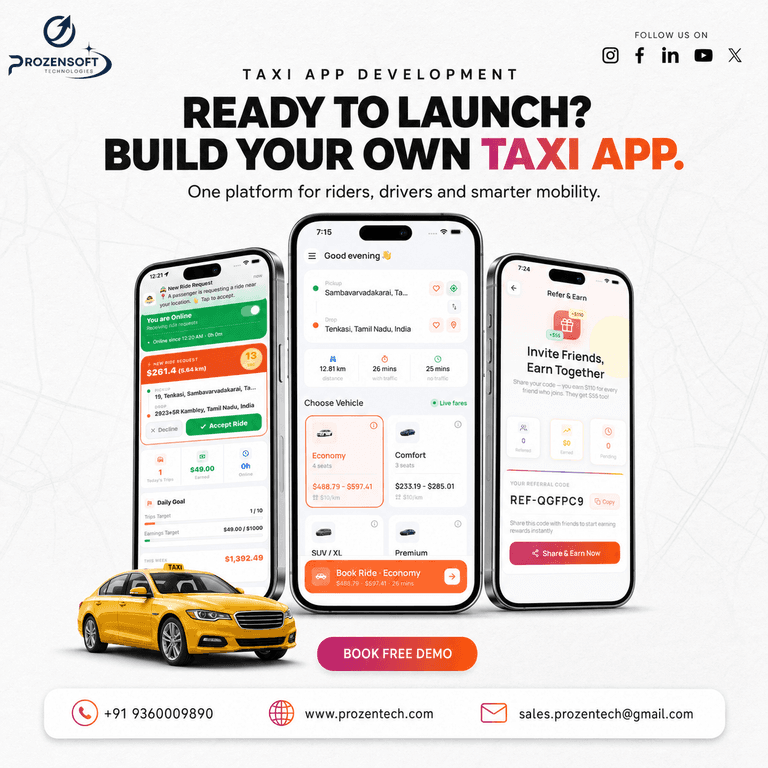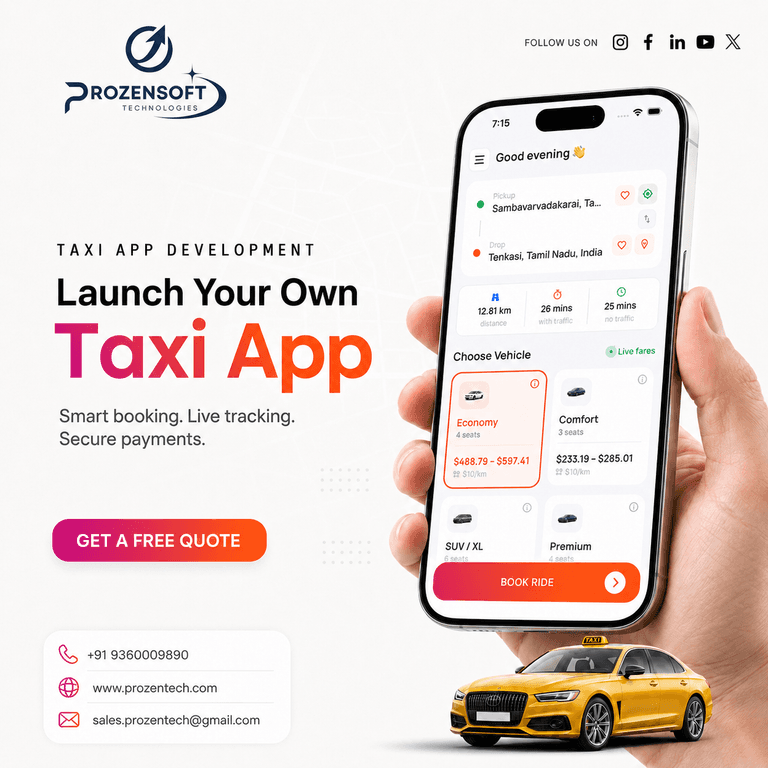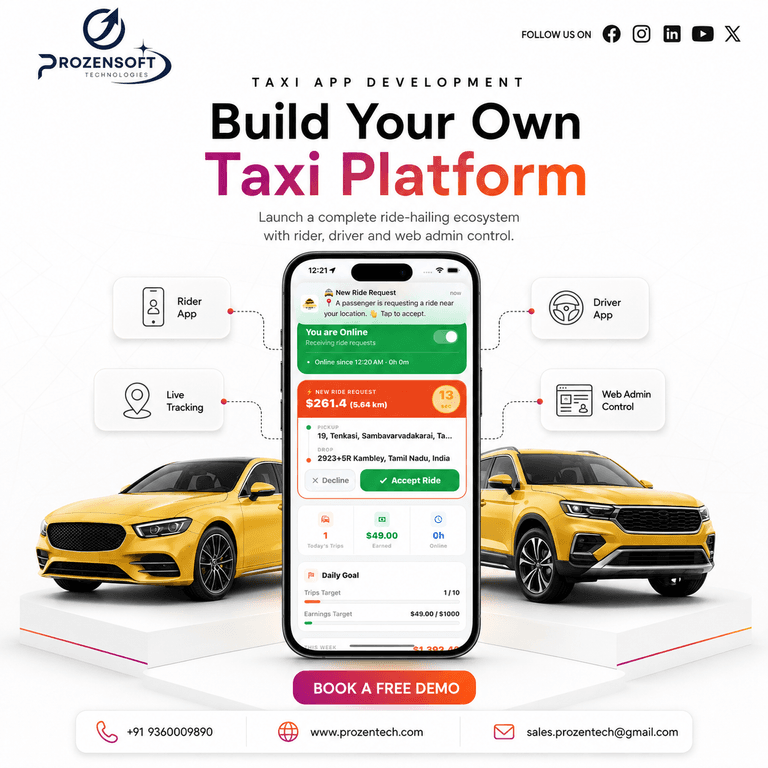

Passenger App: Making Every Ride Simple
The passenger application is the customer's primary interaction with the transportation platform.
Users should be able to request transportation quickly without navigating through complicated screens.
Important passenger app features may include:
- Secure registration and login
- Pickup and destination selection
- GPS-based current location detection
- Fare estimation
- Multiple vehicle categories
- Instant ride booking
- Advance ride scheduling
- Live driver tracking
- Estimated arrival time
- Driver information
- In-app communication
- Multiple payment methods
- Promo codes and discounts
- Trip history
- Ratings and reviews
- Push notifications
- Emergency support features
The best passenger experience minimizes the number of steps between opening the application and successfully requesting a ride.
Driver App: Helping Drivers Manage Trips Efficiently
Drivers need a reliable application that provides clear trip information without unnecessary distractions.
A modern driver app may include:
- Driver registration
- Document submission
- Online and offline status
- Incoming ride requests
- Accept or reject options
- Pickup navigation
- Destination navigation
- Trip status management
- Daily earnings
- Trip history
- Wallet management
- Incentives and bonuses
- Passenger ratings
- Notifications
- Support access
The driver application should perform reliably even during long working hours and frequent location updates.
Build a Scalable Ride-Hailing Platform for Modern Mobility
The transportation industry has moved far beyond traditional phone-based taxi bookings and manual dispatch systems. Today's passengers expect to book a ride within seconds, track their driver in real time, estimate fares before travelling, make digital payments, and receive instant trip updates directly through their smartphones.
For taxi companies, fleet operators, transportation startups, and entrepreneurs, professional taxi app development creates an opportunity to build a complete digital mobility ecosystem that connects passengers, drivers, and administrators through one scalable platform.
However, developing a successful taxi app involves much more than creating a booking screen and displaying cars on a map. The platform must coordinate real-time locations, ride requests, driver availability, automated dispatch, fare calculations, payments, notifications, safety features, and business operations without creating unnecessary complexity.
A thoughtfully developed taxi application can transform a traditional transportation business into a modern, technology-driven mobility platform capable of serving customers across cities, regions, and countries.
Why Taxi App Development Is Transforming the Transportation Industry
Customer expectations have fundamentally changed. Passengers increasingly prefer convenience, transparency, speed, and real-time visibility when booking transportation.
Traditional taxi businesses may depend on phone calls, radio dispatch, street pickups, or manual coordination. These methods can become difficult to scale as booking volumes and fleet sizes increase.
A modern taxi booking platform can provide:
- Instant and scheduled ride booking
- Real-time driver availability
- Automatic driver assignment
- Live GPS tracking
- Upfront fare estimates
- Multiple vehicle categories
- Secure digital payments
- Driver and passenger notifications
- Trip history
- Ratings and reviews
- Promotions and referral programs
- Centralized fleet management
The greatest advantage is connectivity. Passengers, drivers, and business administrators operate through one coordinated digital ecosystem.
A Complete Taxi App Is More Than One Mobile Application
A scalable ride-hailing platform typically consists of three essential components working together.